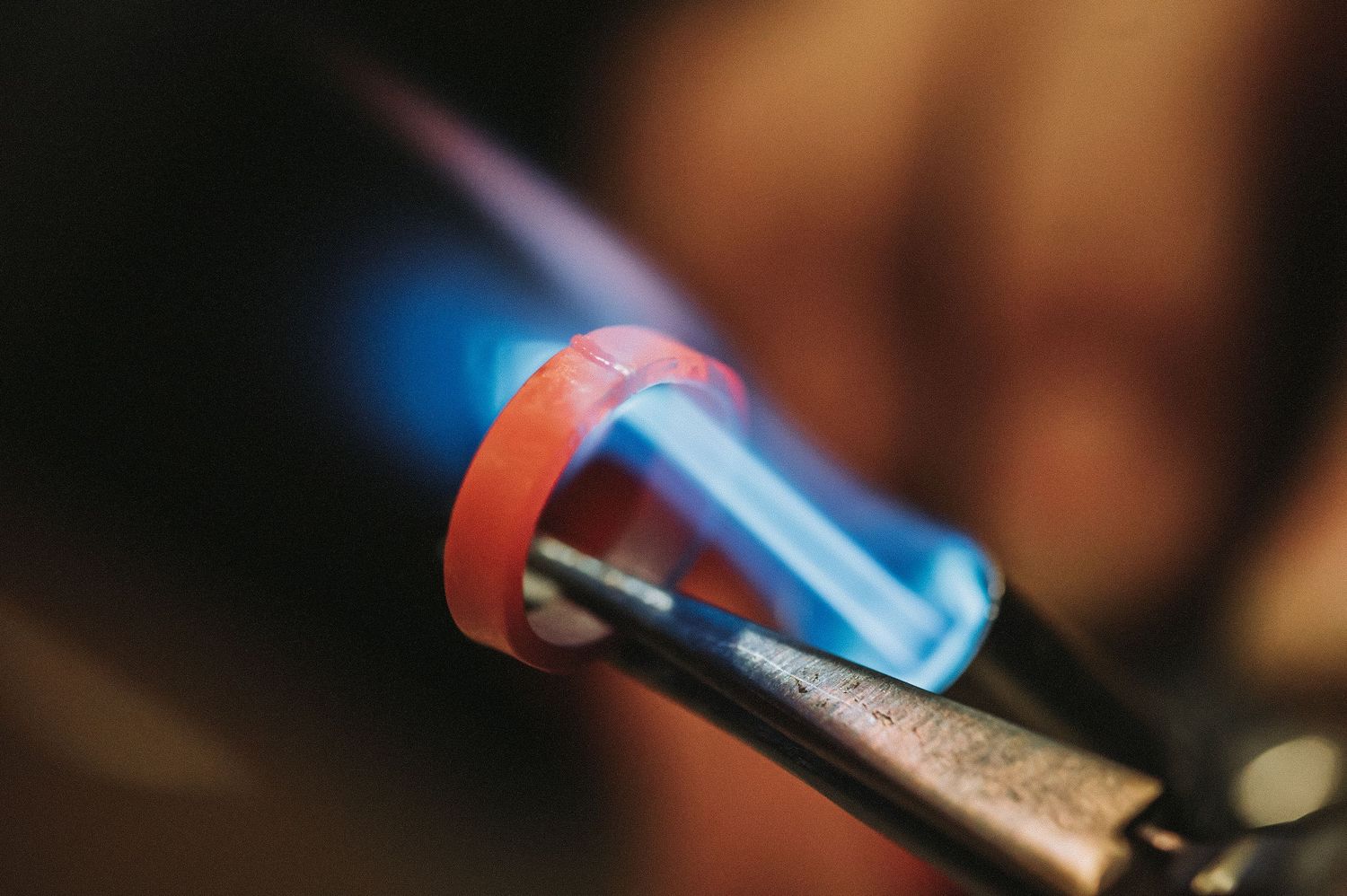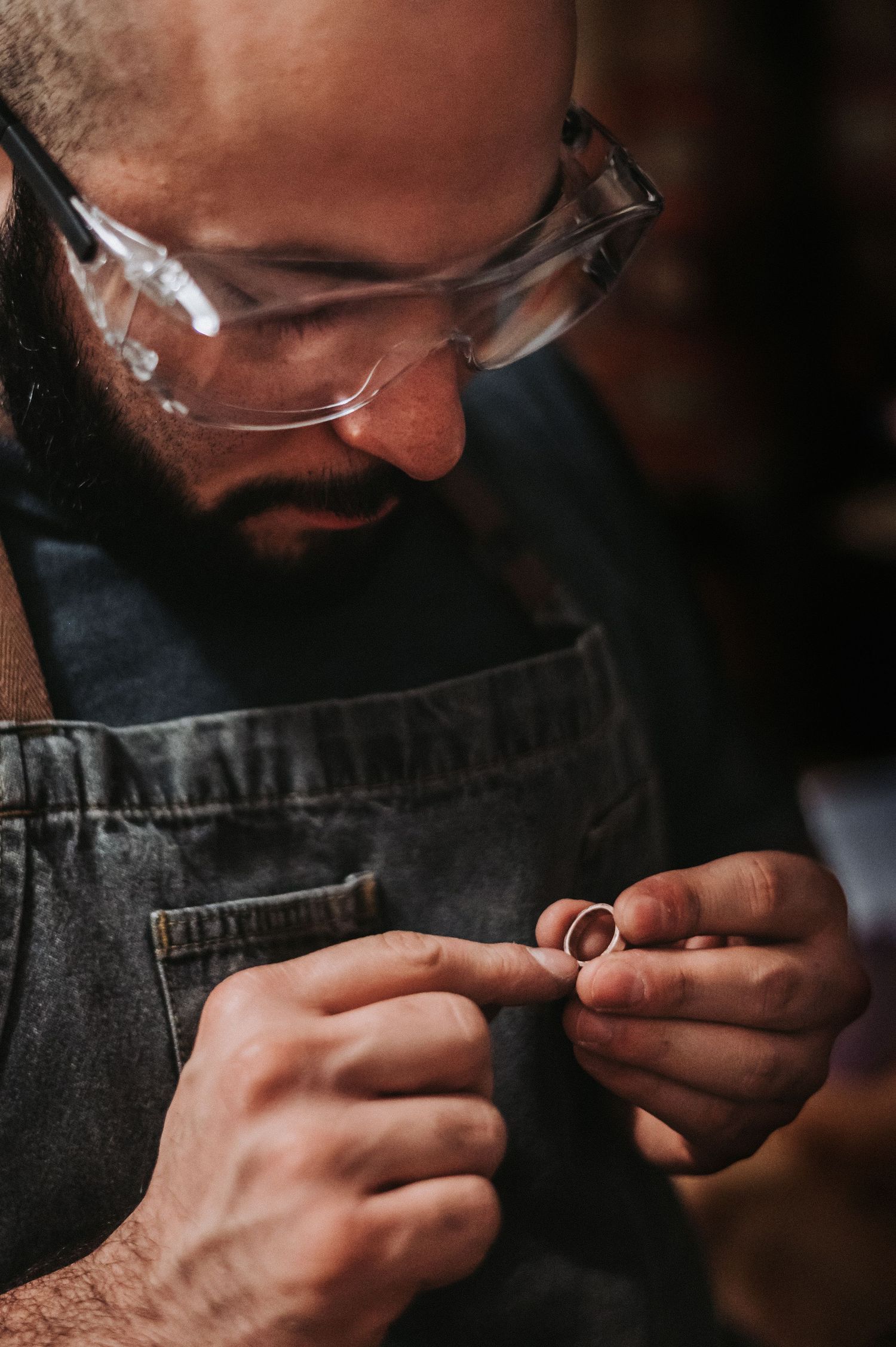
Documenting the ring-making process
When I went wedding ring shopping with my wife, we did most of our searching online. Los Angeles had slowly starting allowing businesses to operate for in-person retail shopping during a long "2 week" lockdown, so we decided to go to a few stores to try some rings on. As someone who never had an interest in wearing a ring (or any jewelry, except for a wrist watch) at any point in my life, this process was novel to me. What material should we consider? Is sizing standard in the industry? How should the ring feel when it's on my finger? Will this design be to our liking? I'm somewhat of a minimalist, so I wanted something simple, understated, and comfortable. Linda, my wife, also has minimalist tendencies, so she also opted for something with the same parameters. We ended up going with an online ring maker based in New York. The rings they offered were simple, understated, and comfortable. Also, they could get the rings to us in a short period of time. This was during Covid, and we were set on getting married sooner than later.
Once the rings arrived, I was impressed. They were exactly what we were looking for, and the photos on the website were accurate. That was a relief. We were happy with the choice.
It felt strange to wear a ring. This foreign object added considerable weight to my left hand ring finger, and it felt like it was going to make sounds when touching things. Is this how a ring should feel? After several months, it felt strange for me not to have a ring on my finger. Except for times when it required removal when doing certain tasks, it was glued on. I did forget to put it on before going to work a few weeks into my marriage. I was unbalanced the entire day. Those few ounces can make a difference.
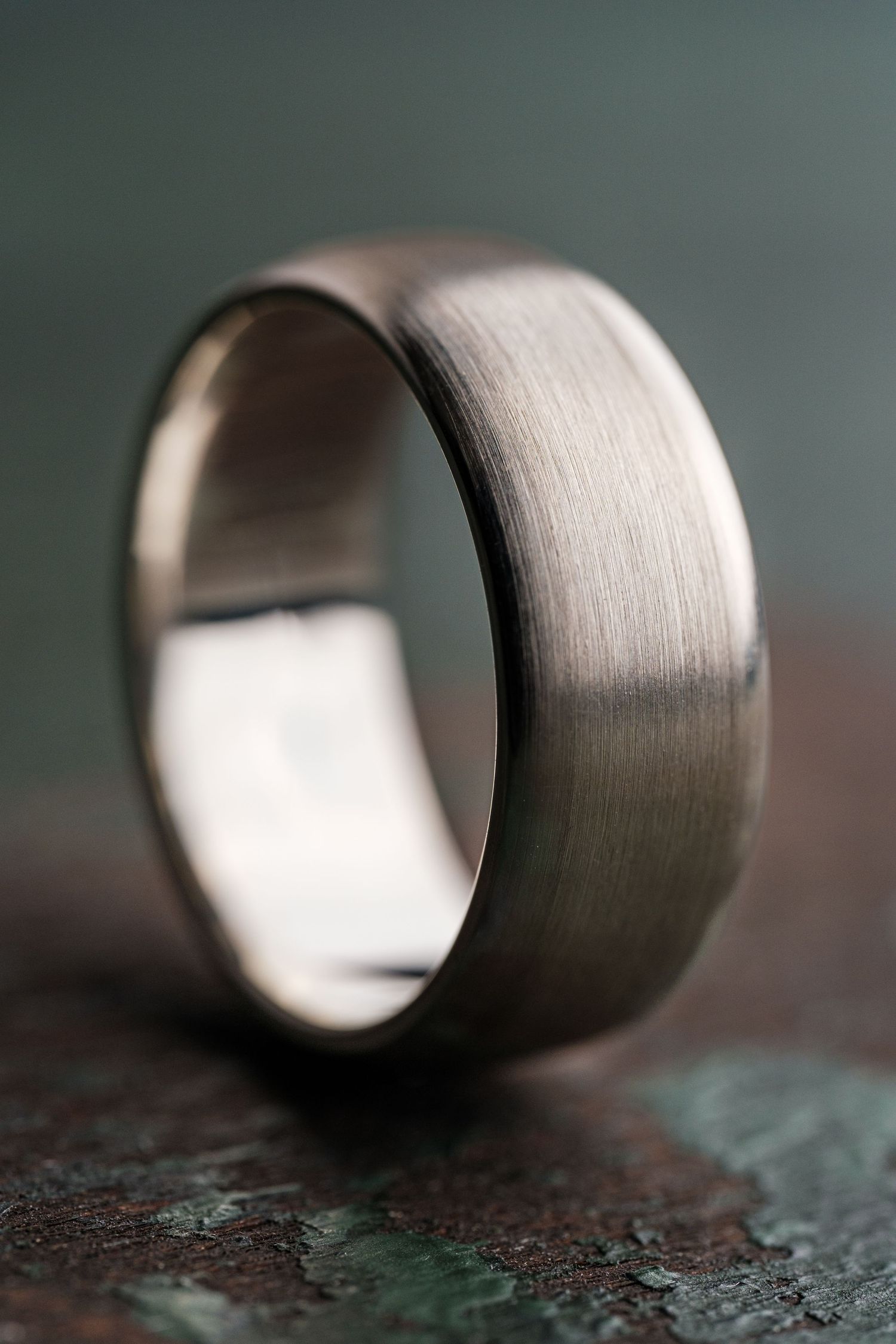
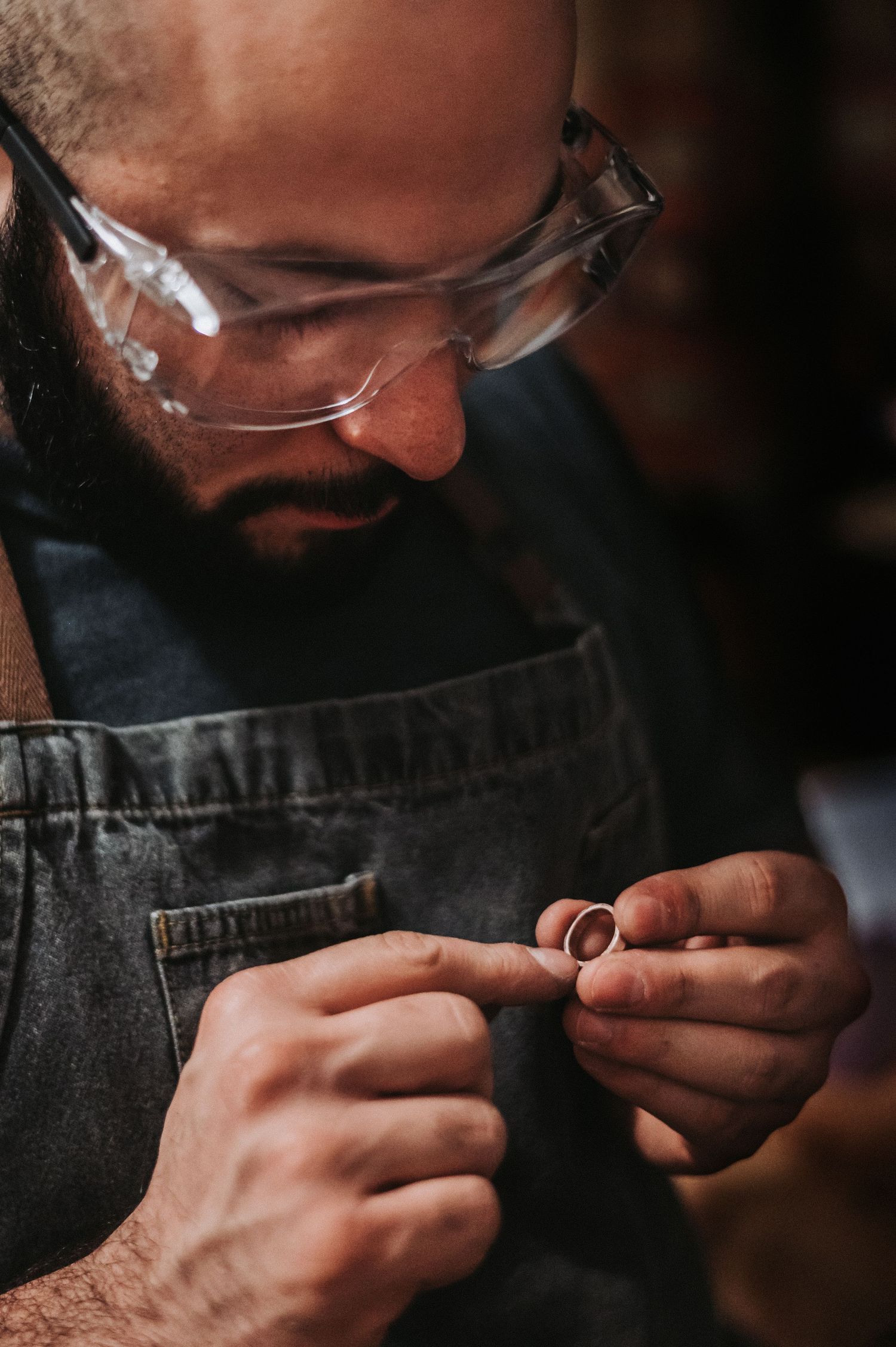
A platinum ring with brushed texture made by James Calix
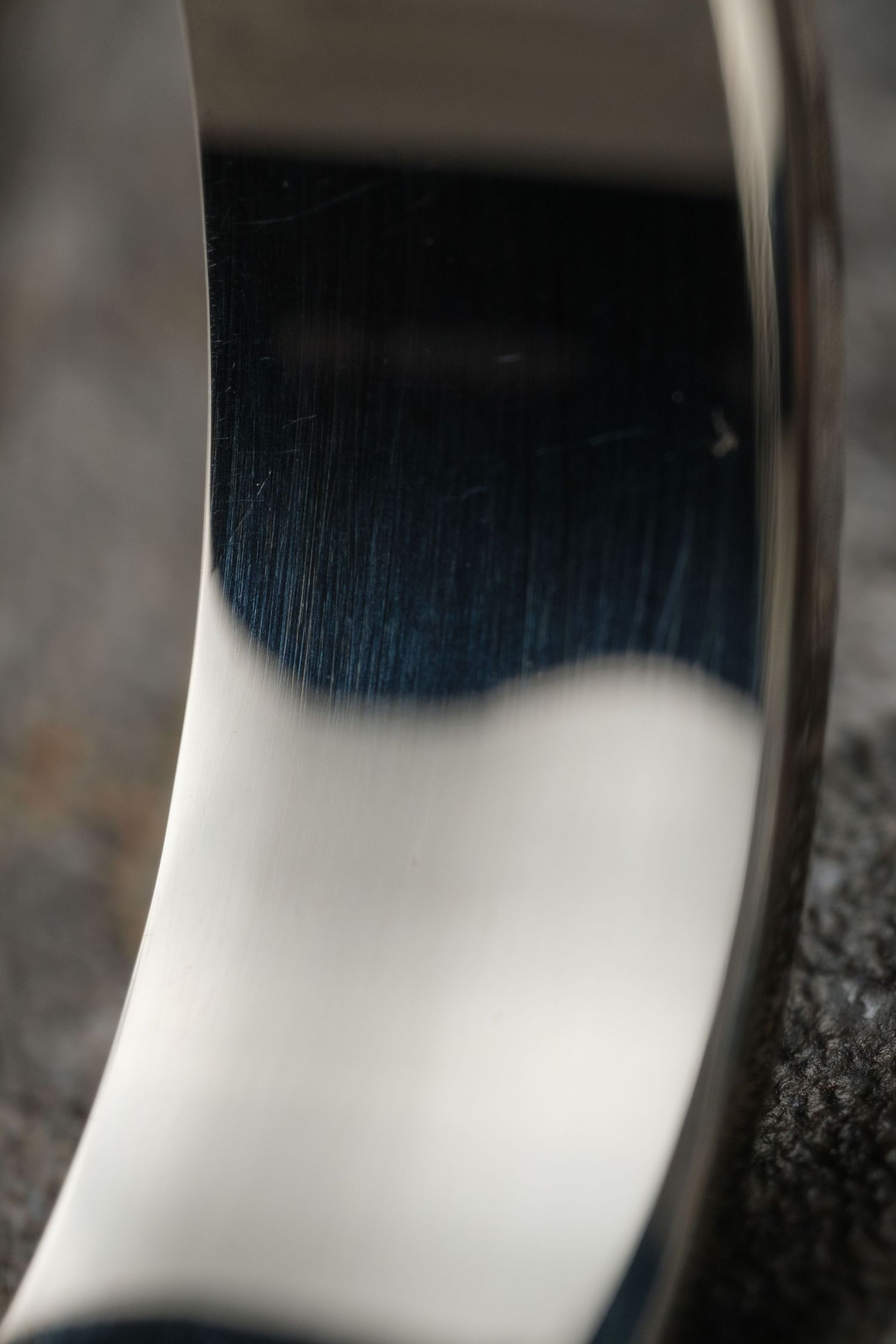
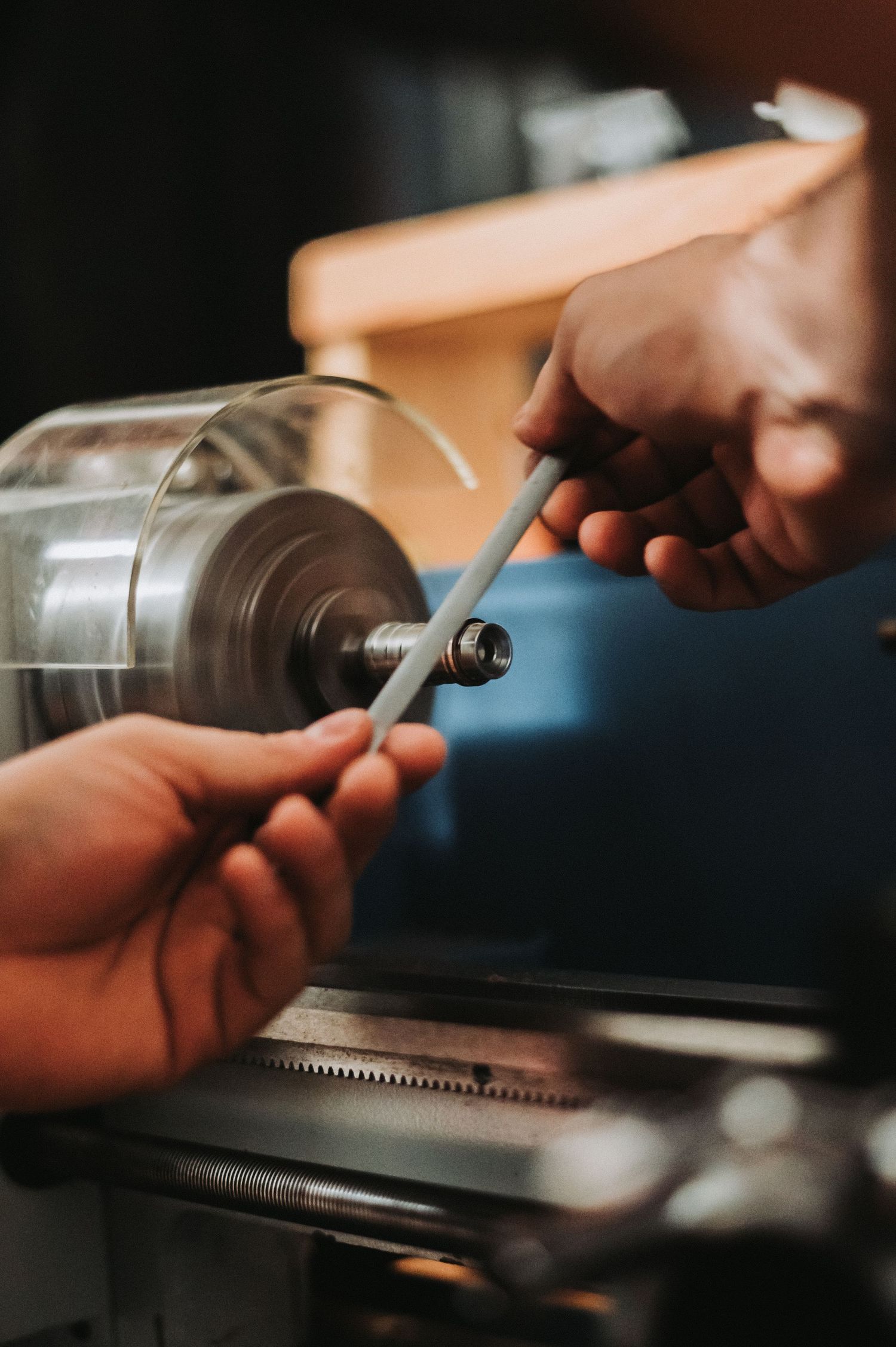
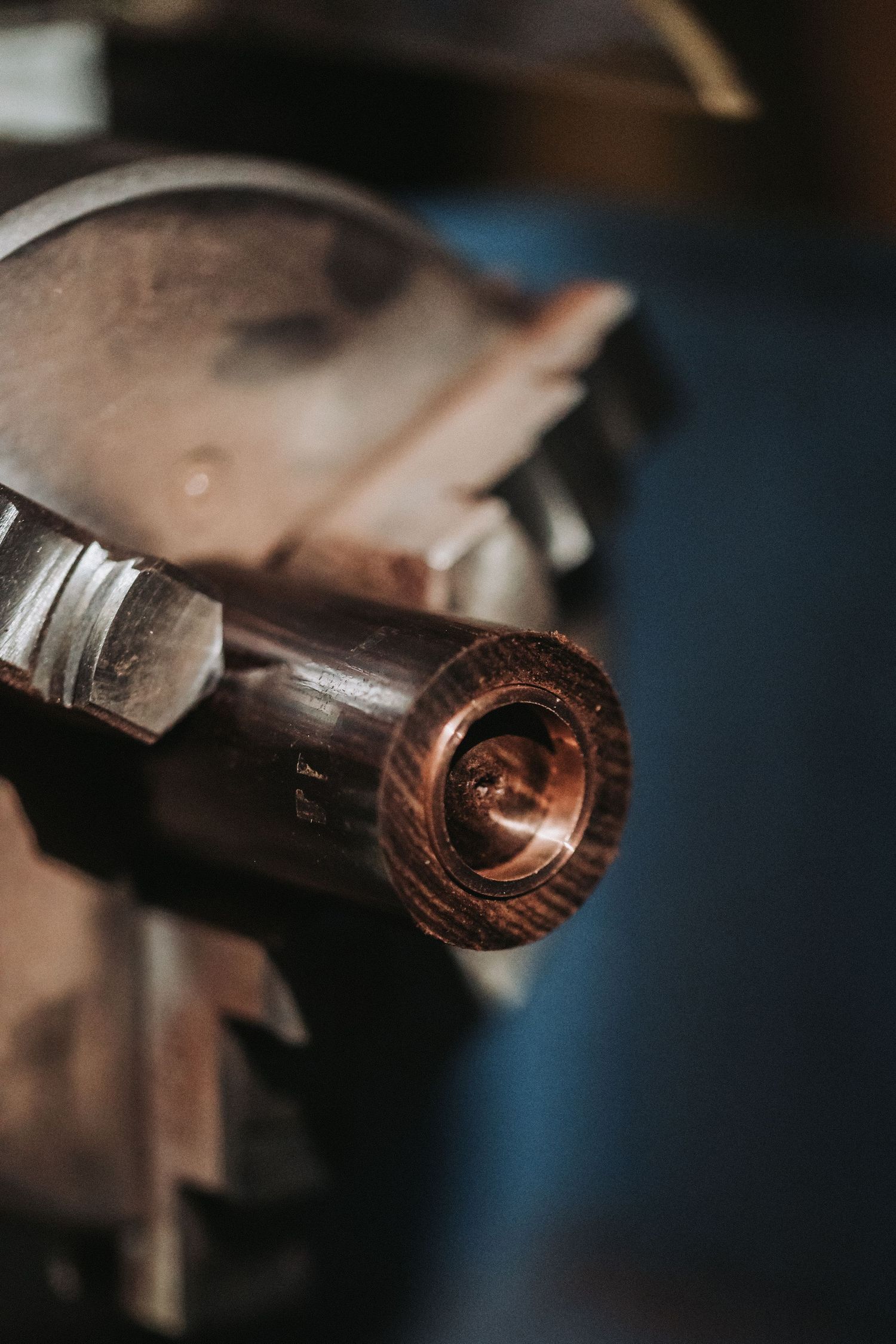
The inside texture was polished to achieve a mirror-like surface.
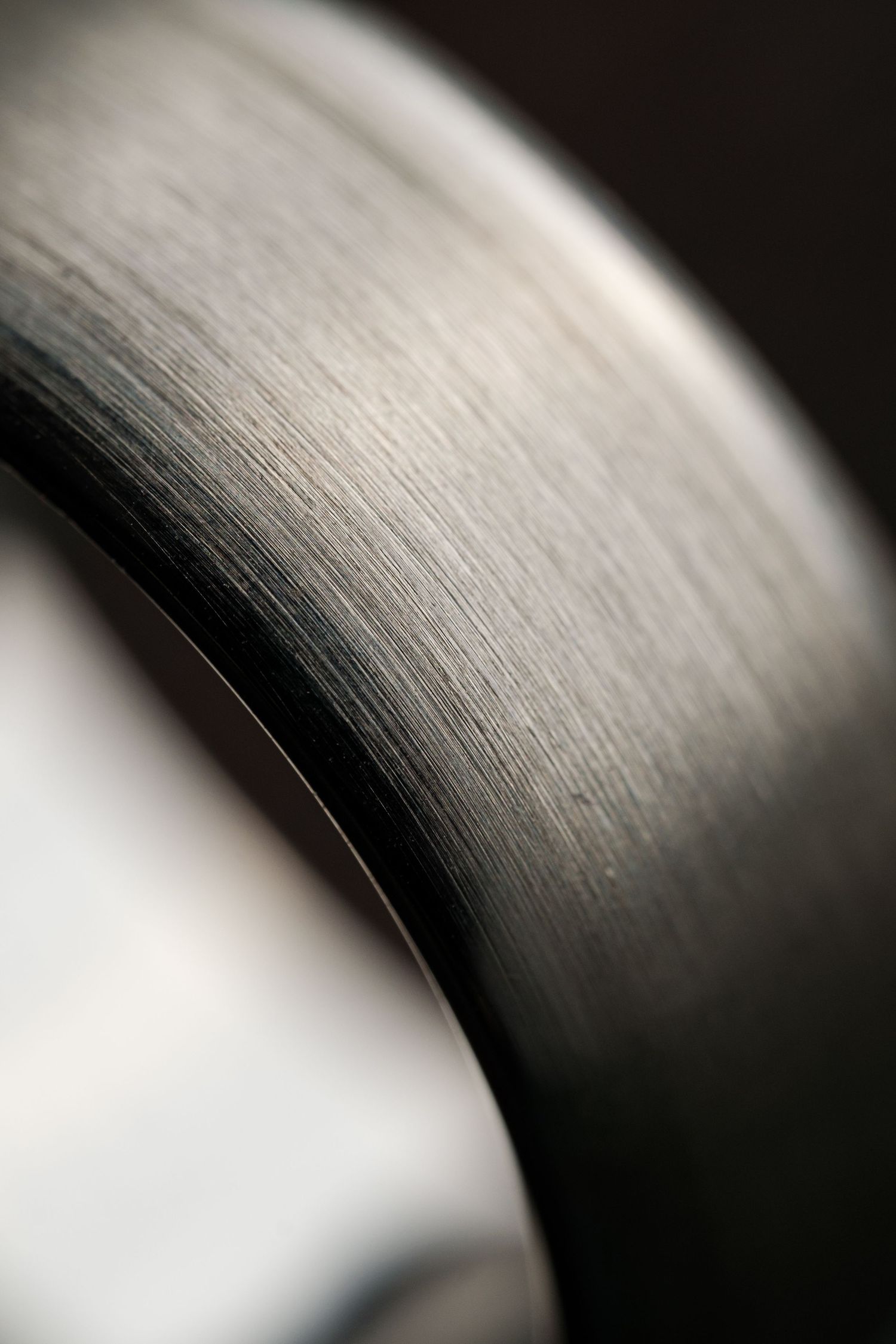
Sandpaper was applied to the outter surface to create the "brushed" look.
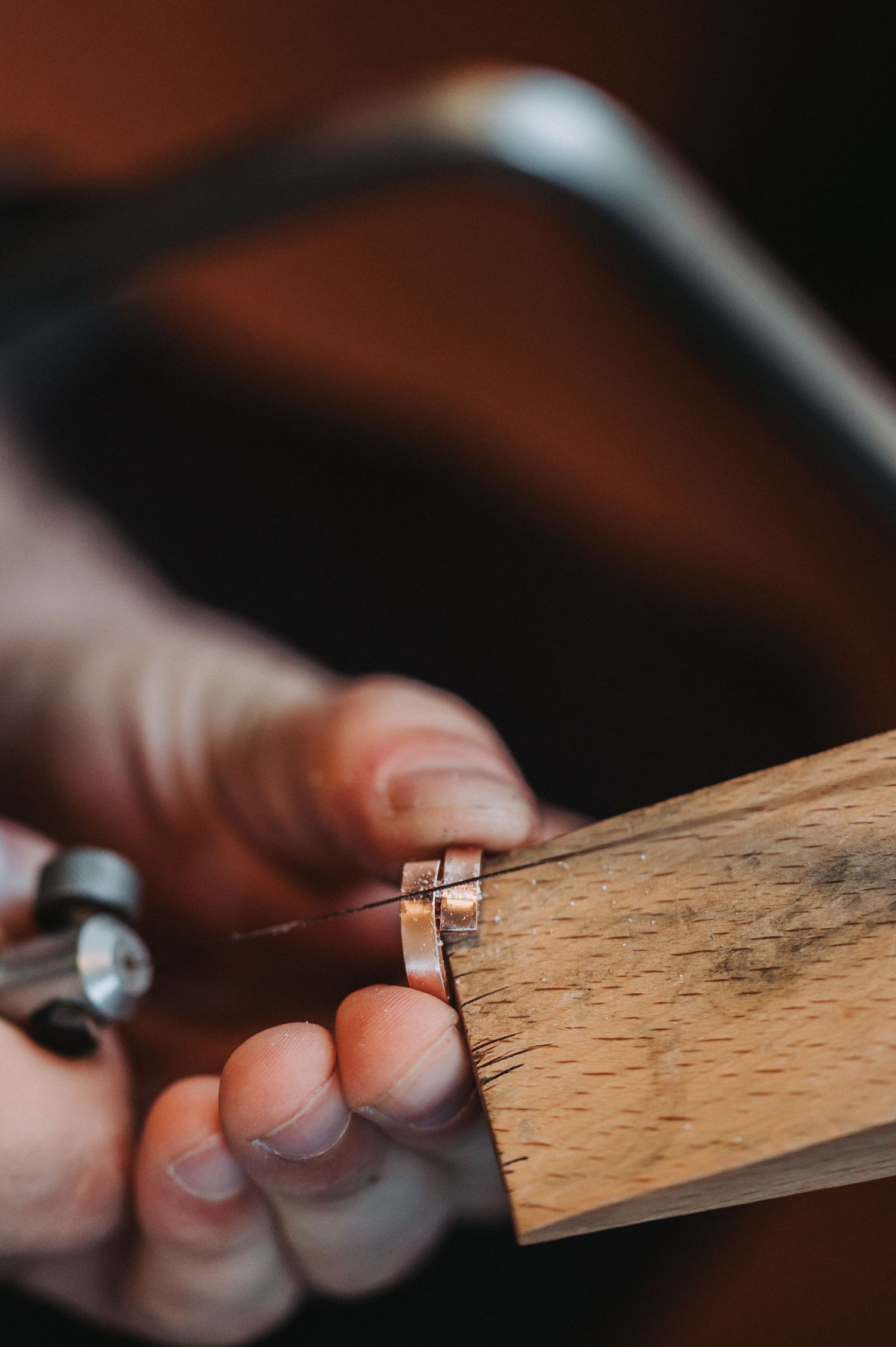
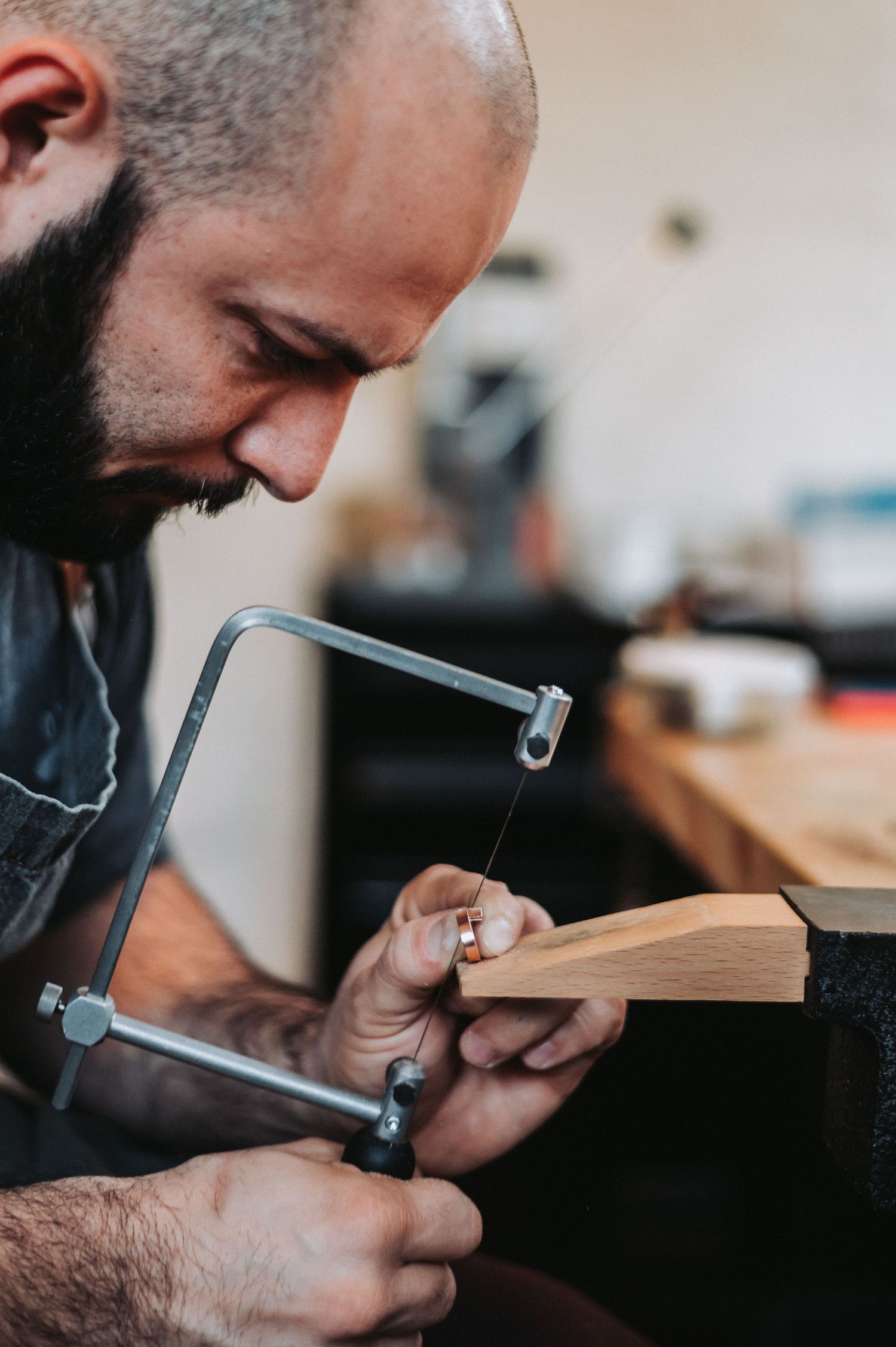
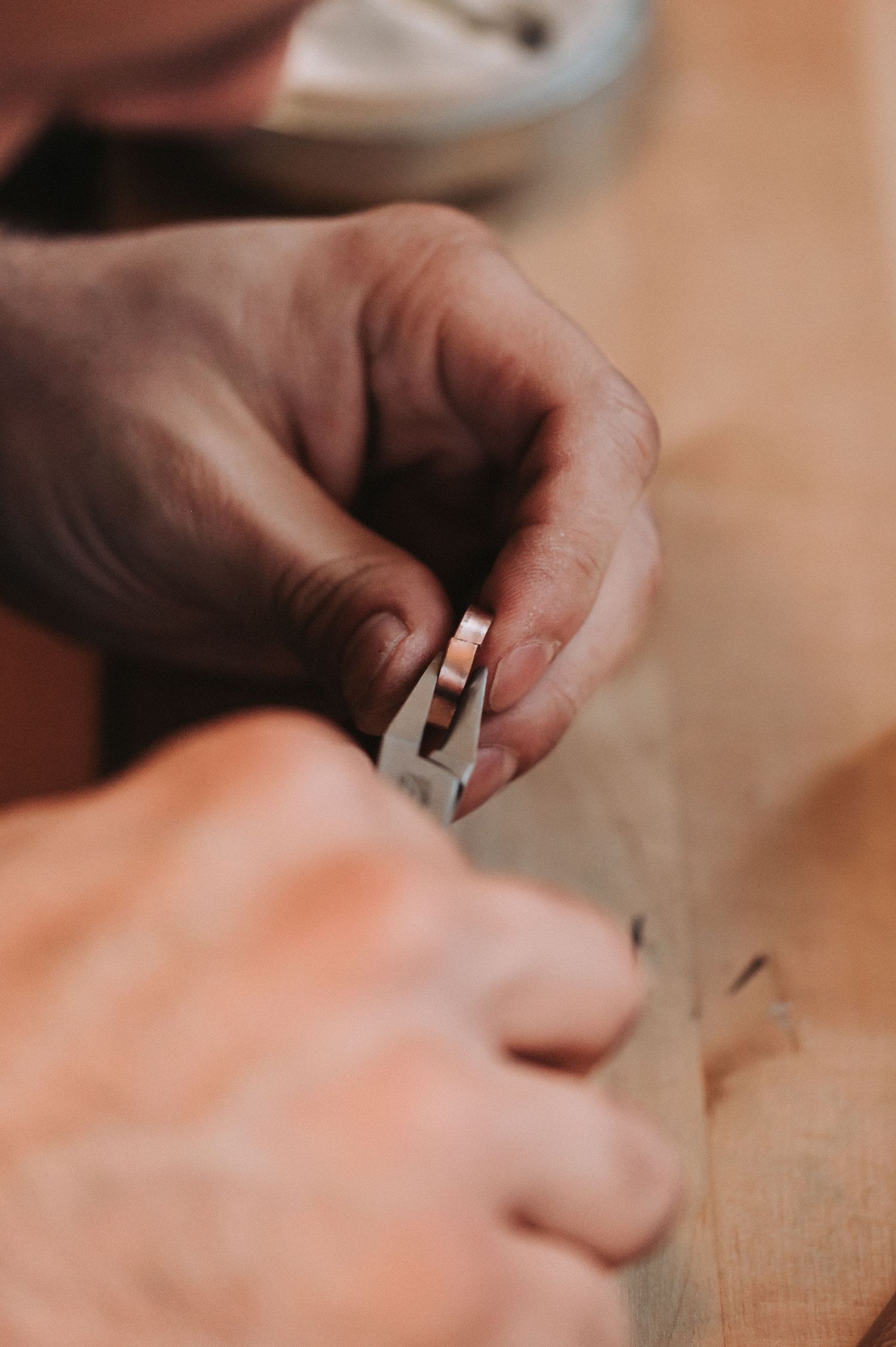
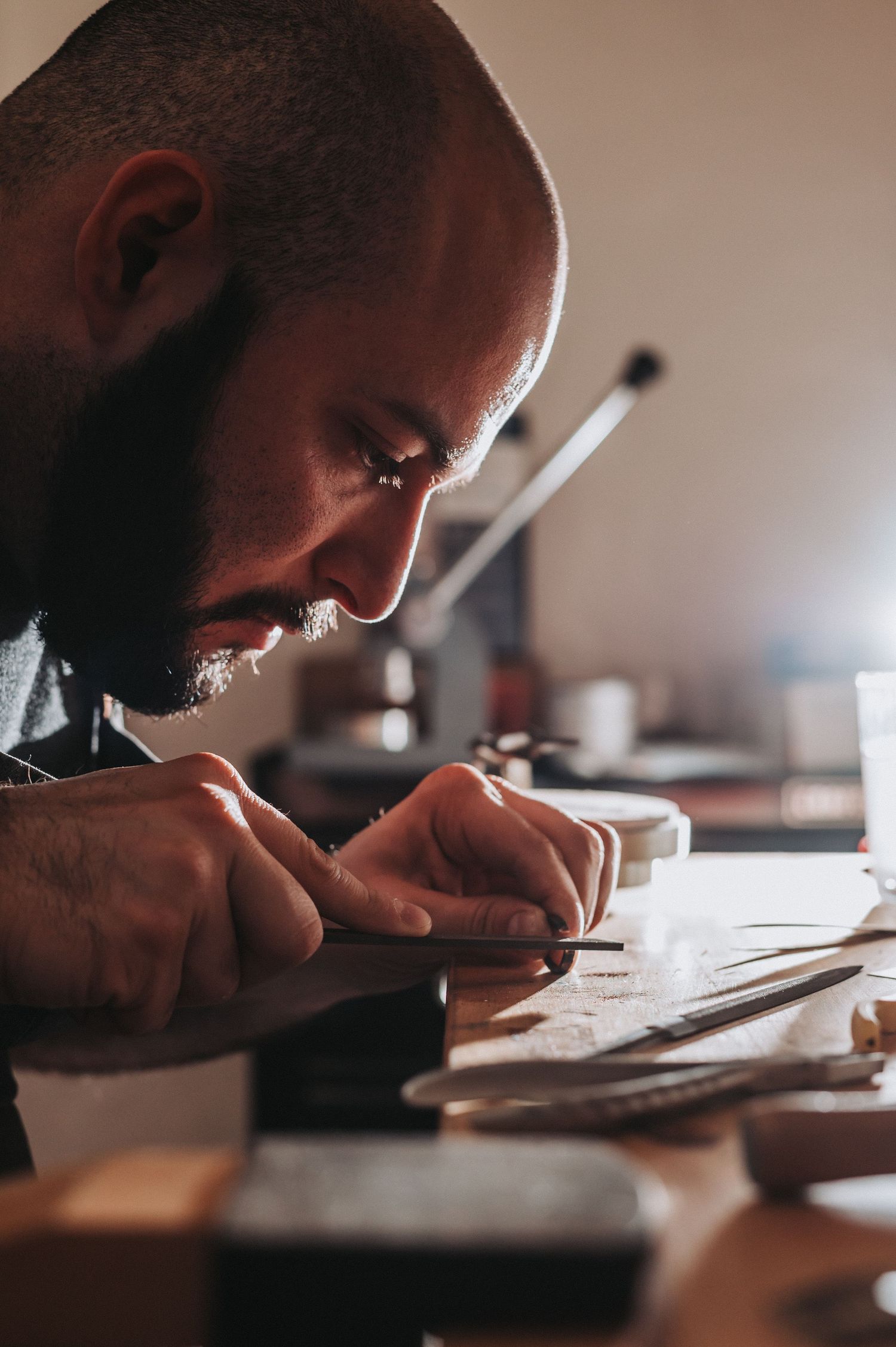
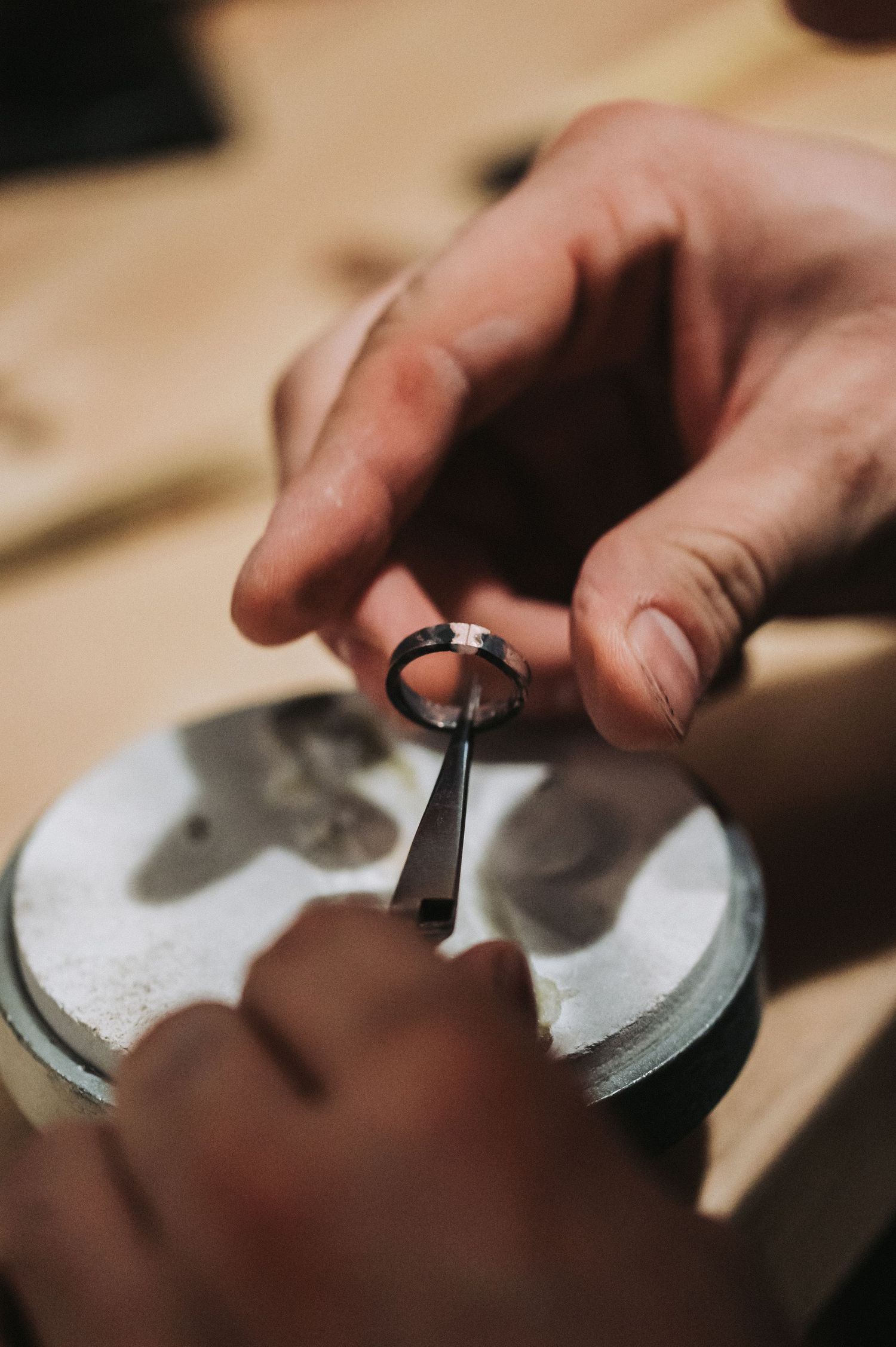
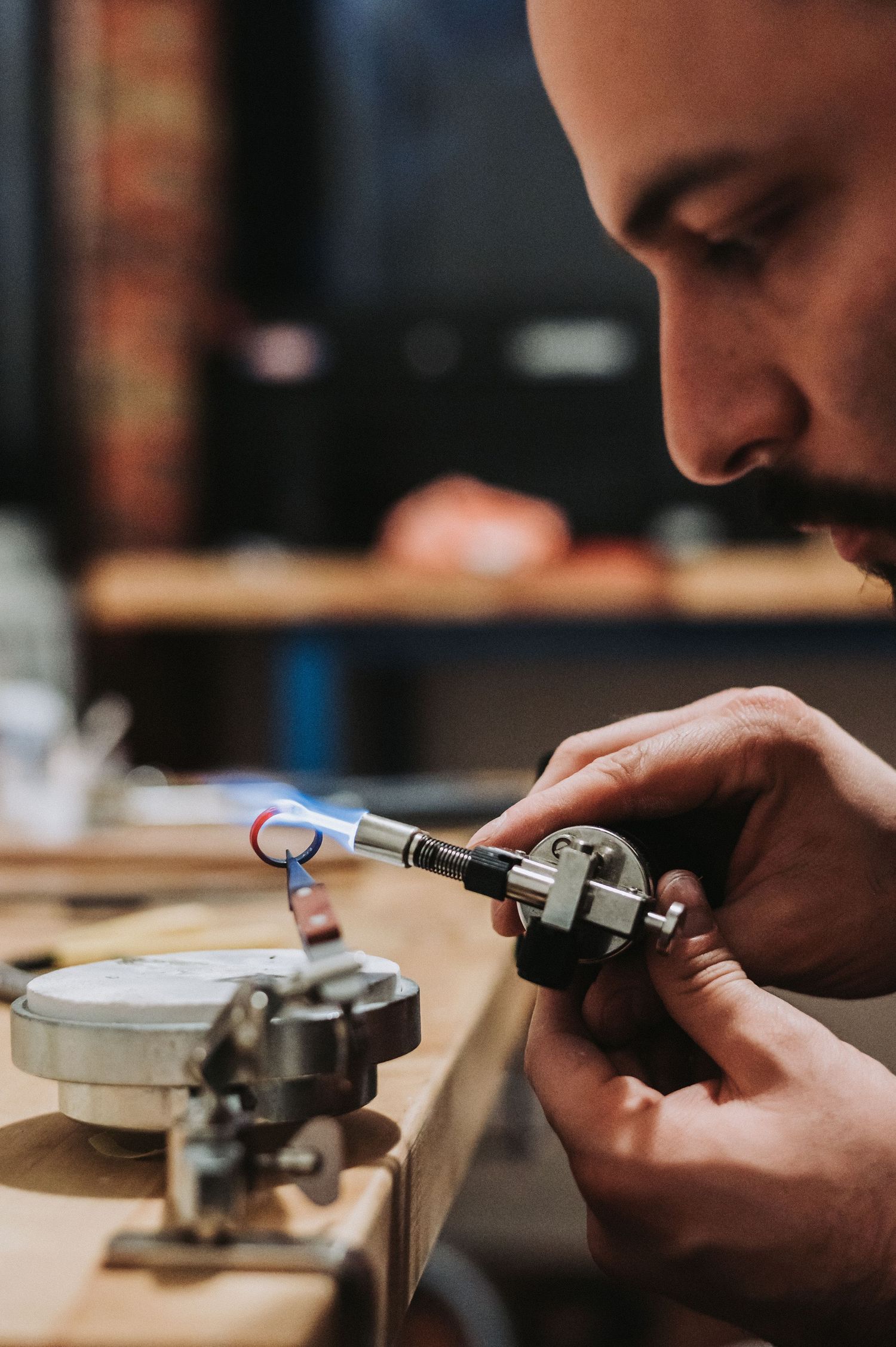
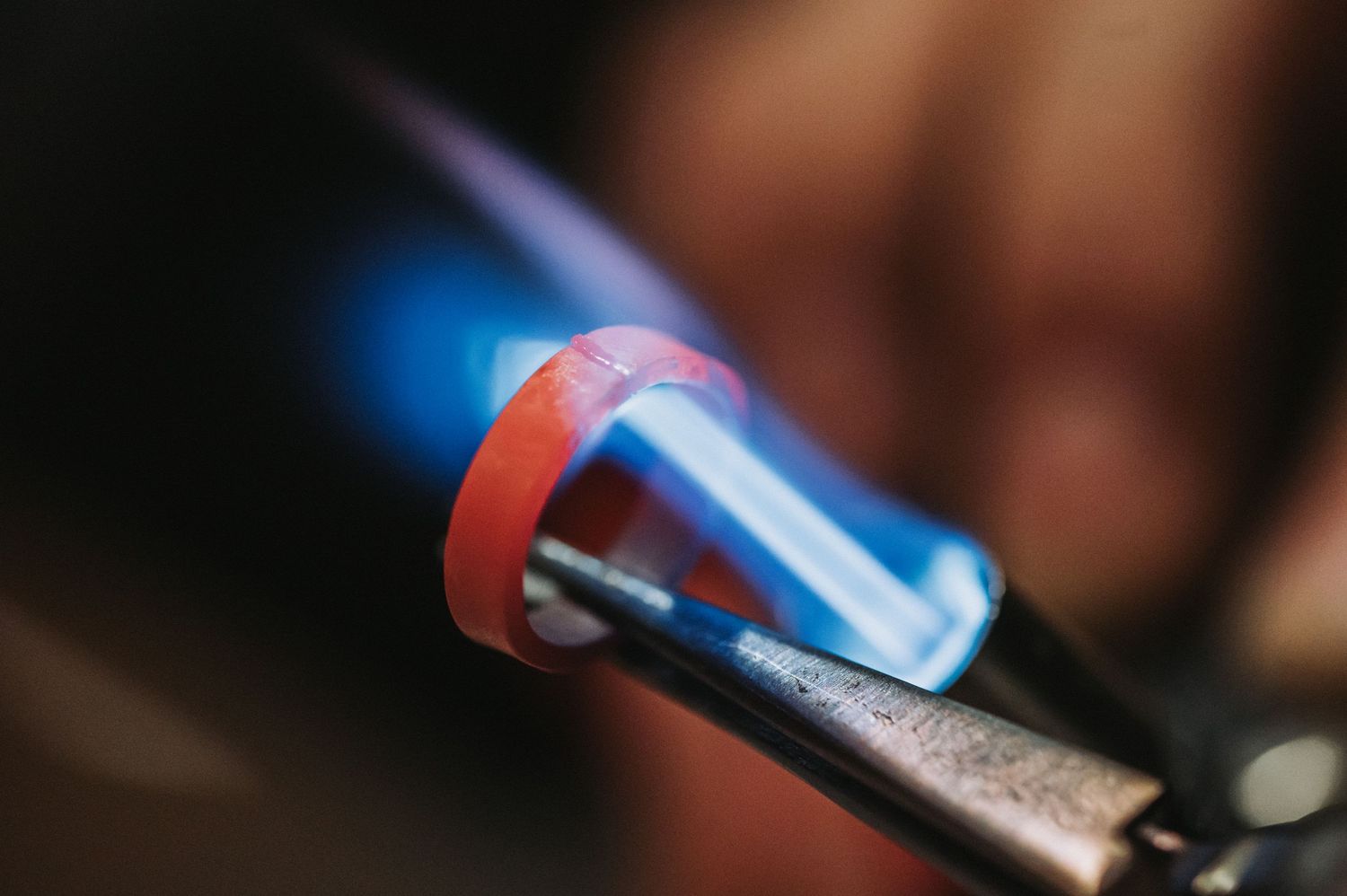
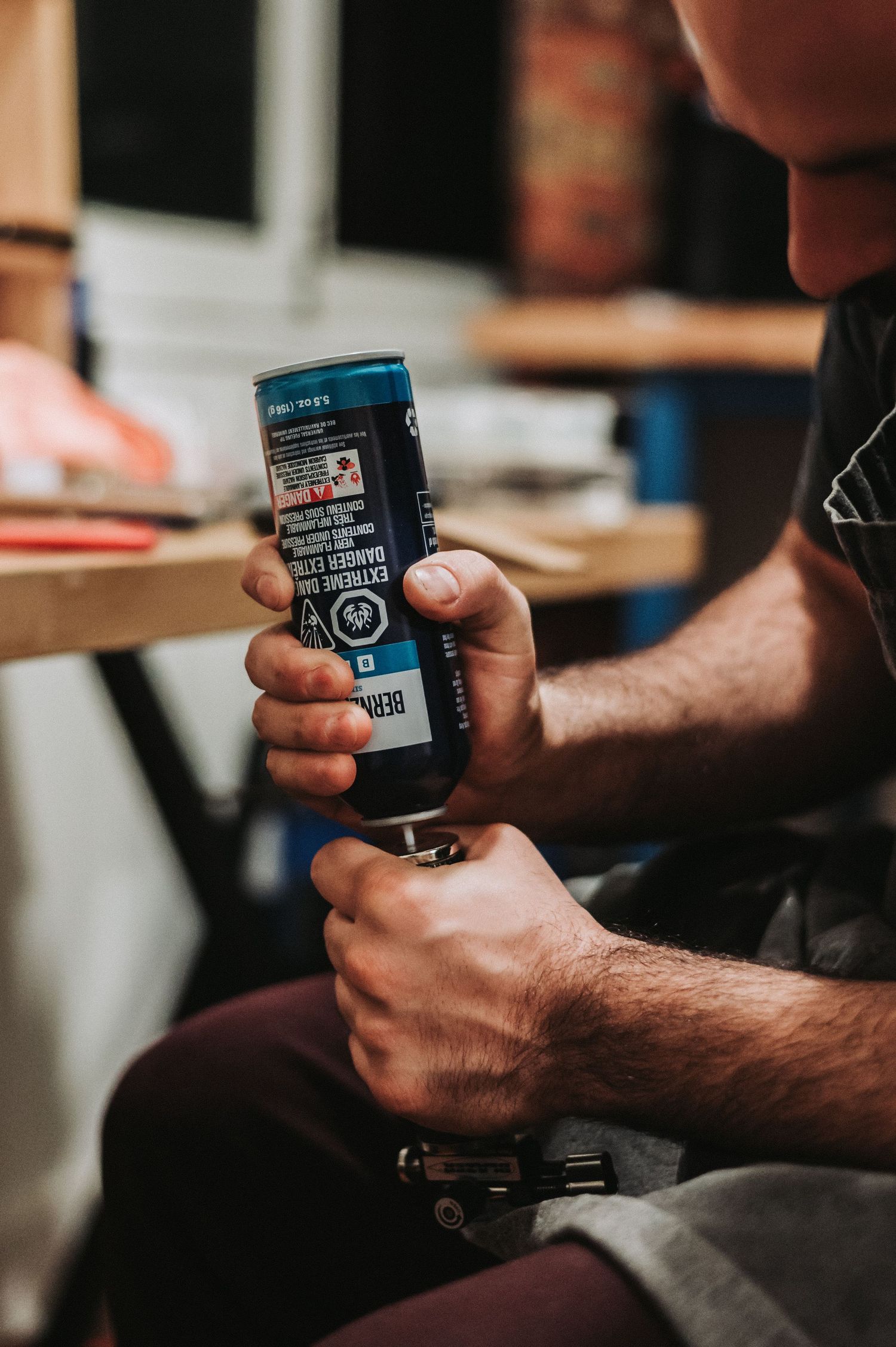
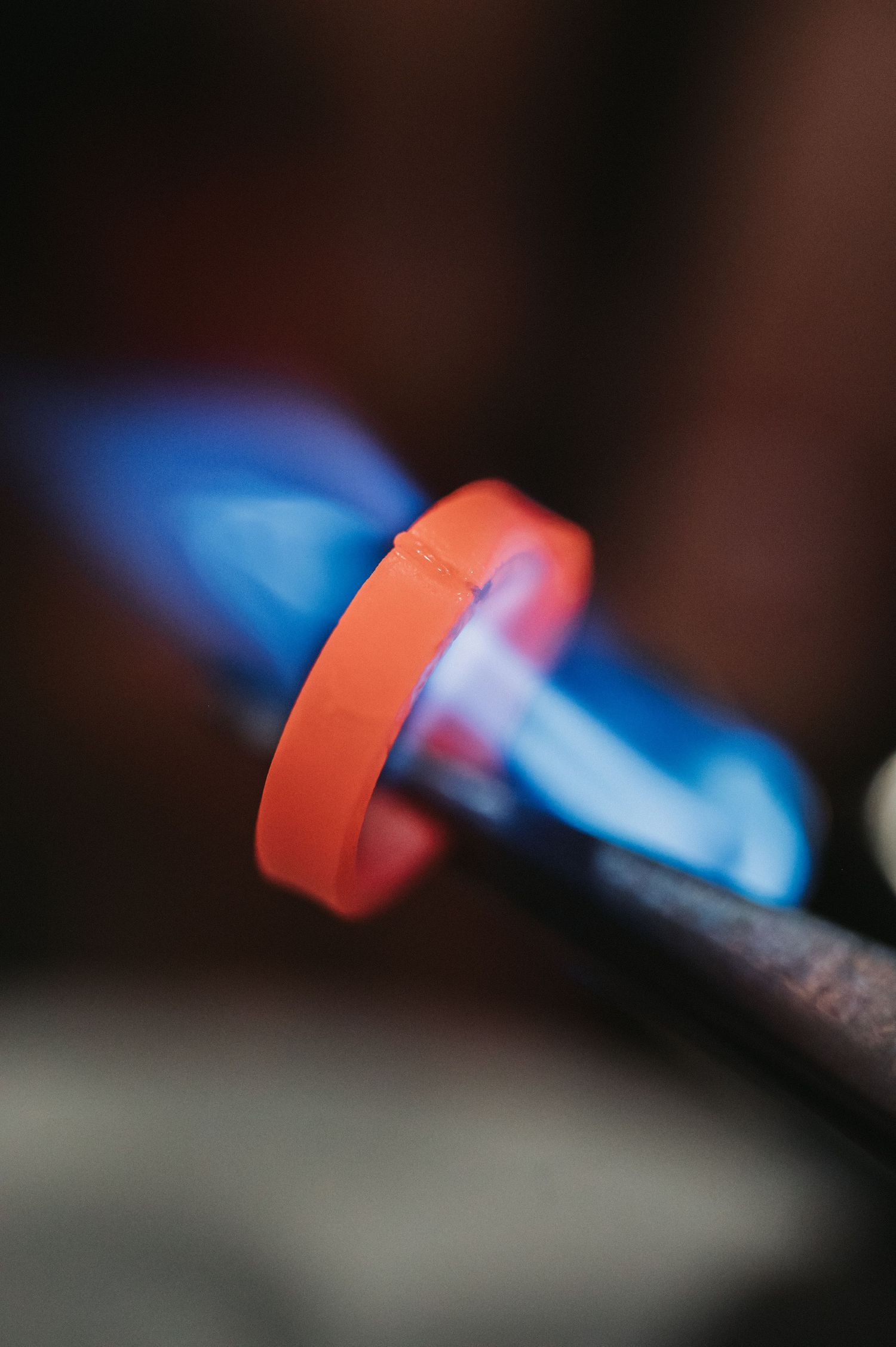
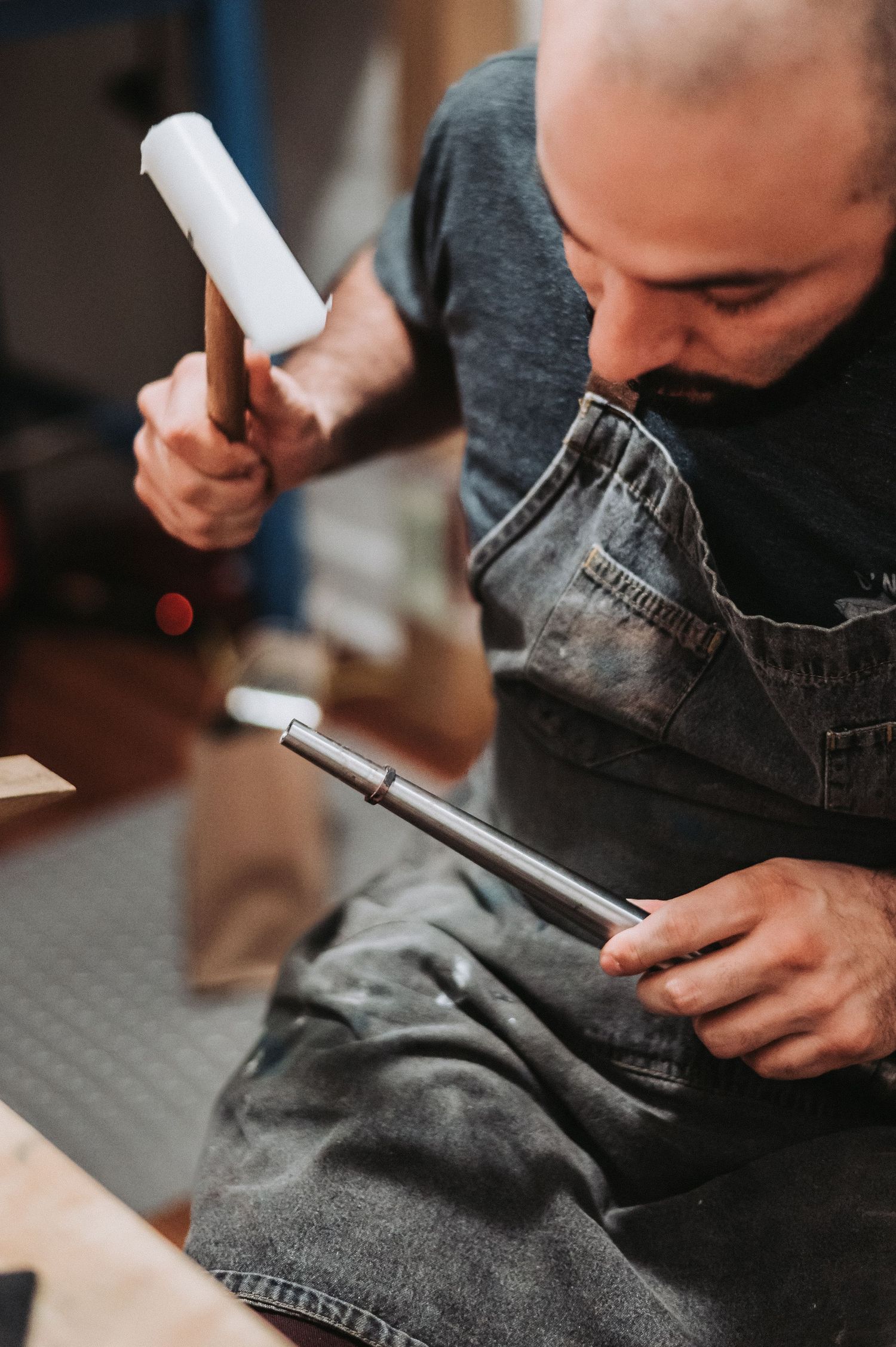
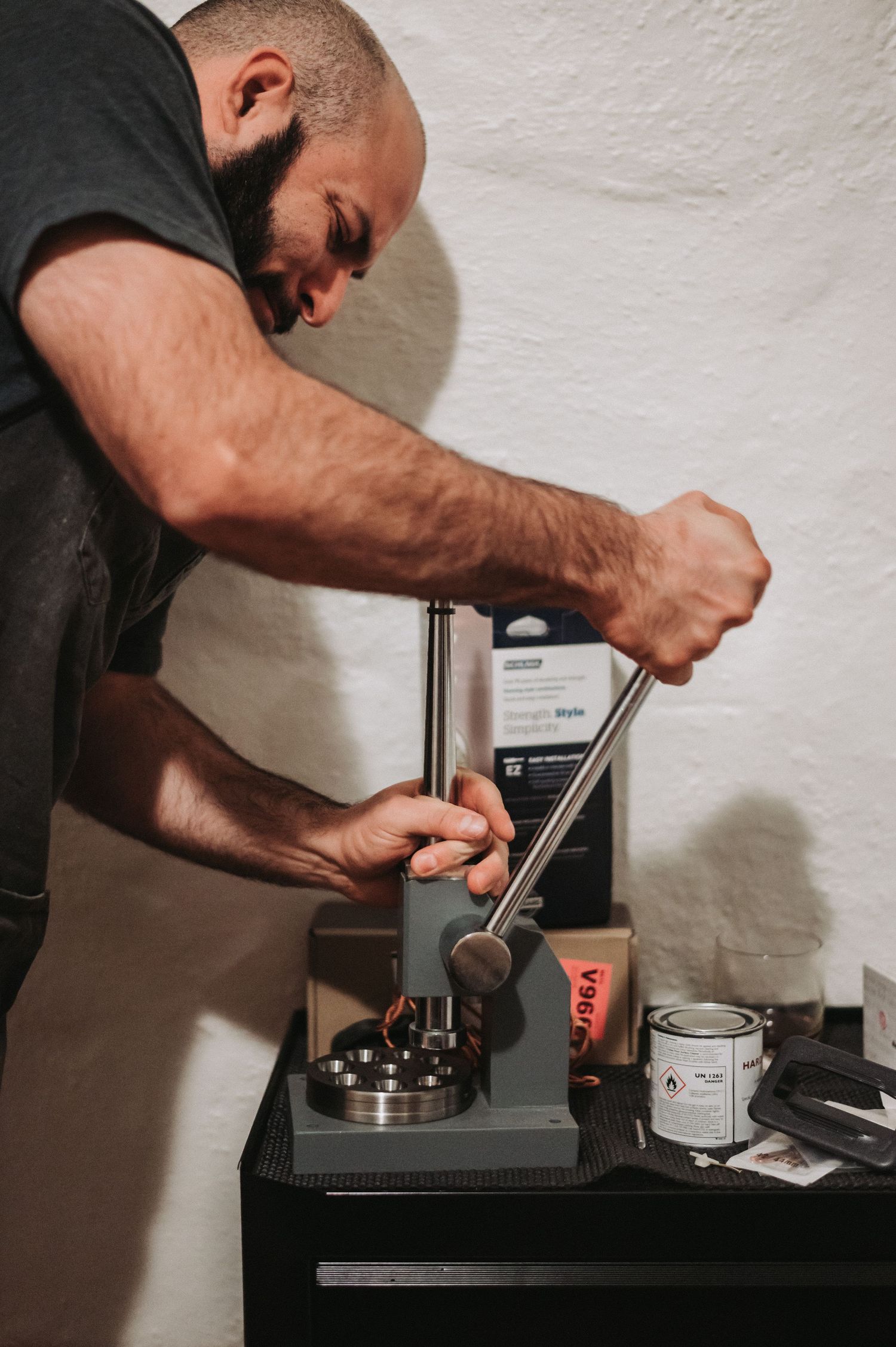
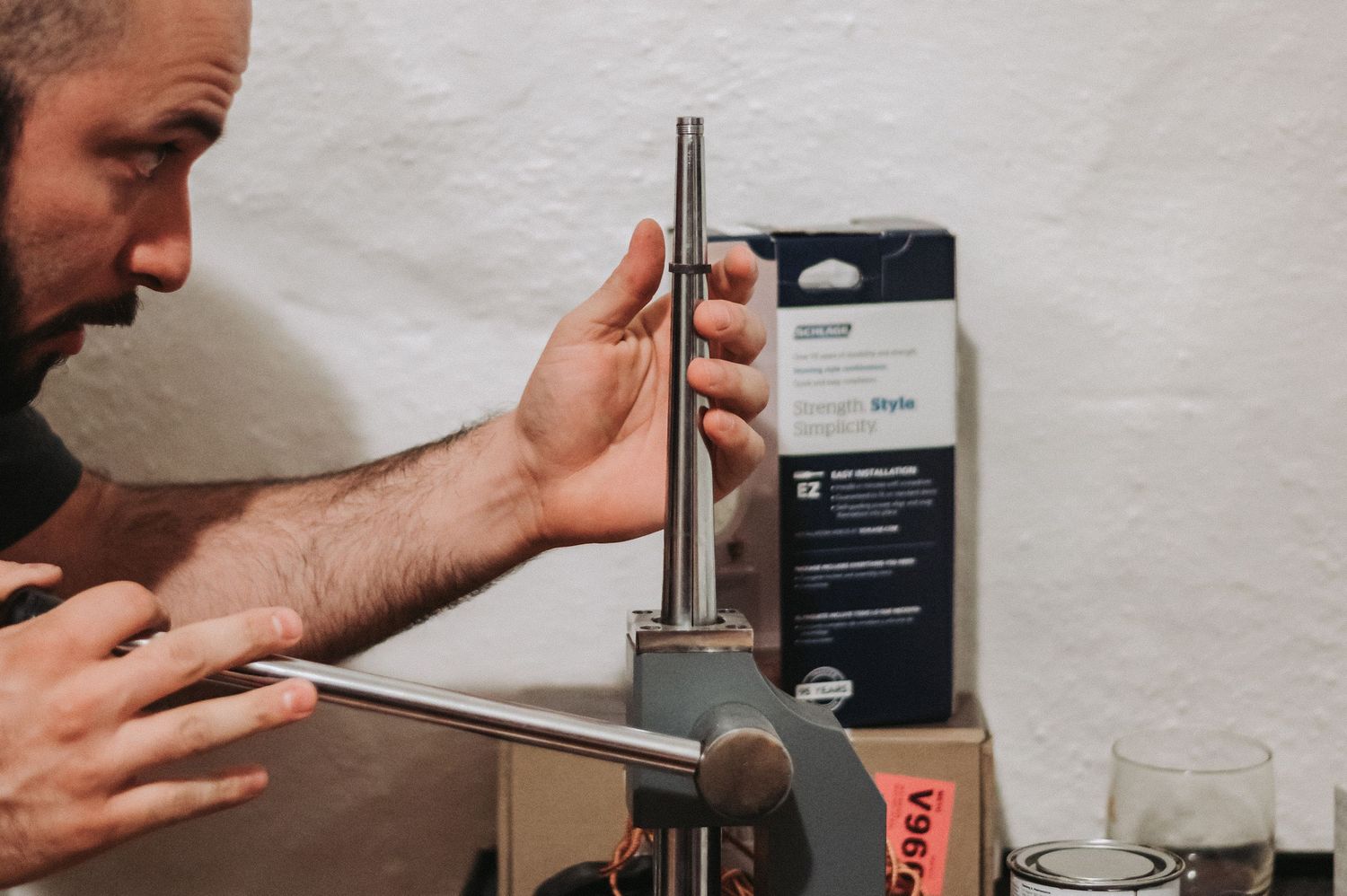
Rings are fundamentally simple objects. It's a round piece of metal that needs to fit one's finger. It can be adorned with other materials, like diamonds or wood. It can be flat edge to edge, have beveled corners, or perhaps rounded. These seemingly simple variations can change the look, feel, and fit. As someone who has watched coworkers machine metal for custom projects and repairs for musical instruments, I had a basic understanding of how difficult achieving details, such as chamfering edges at a specific angle or ensuring that a surface is truly flat, required proper machining set up, patience, and skill. Making custom rings seemed to have an additional consideration: sizing. How can one ensure that a custom ring is sized correctly? Once I was able to sit through a ring making session, I had a better understanding of how difficult this part could be. Luckily, I was afforded that opportunity with my camera in hand.
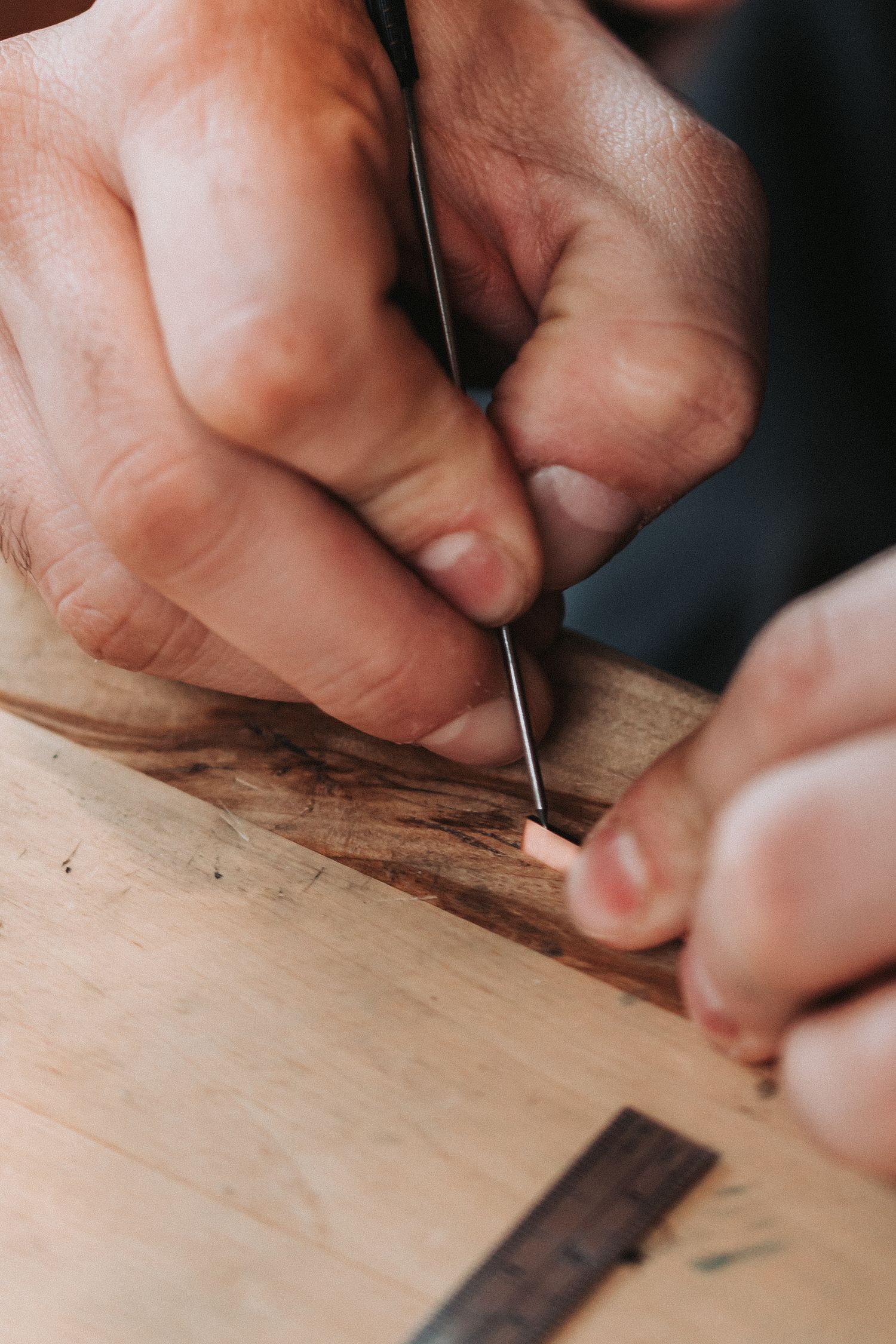
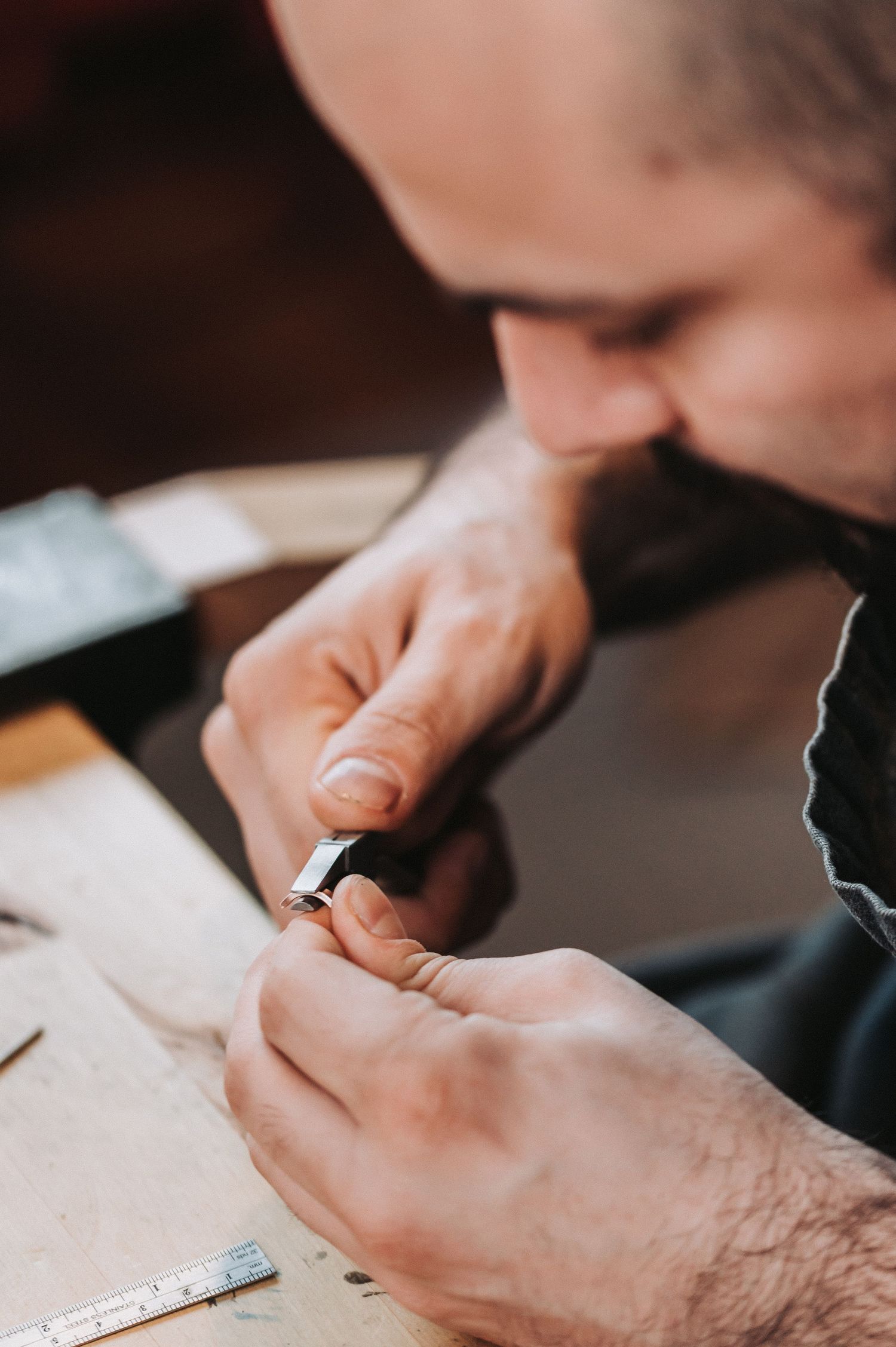
After months, we found time to document the process
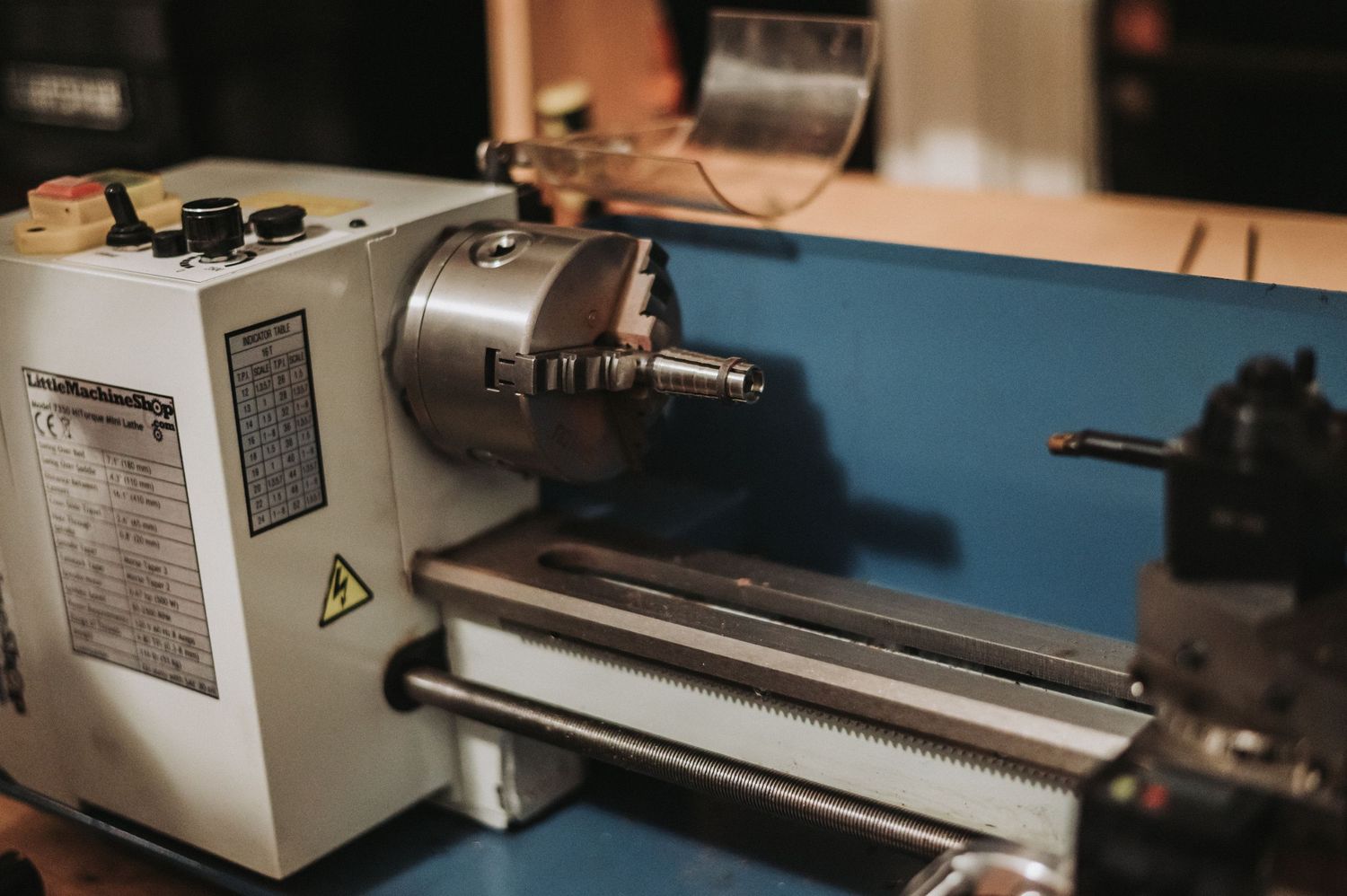
I saw James 5 days a week at work. Since I was a manager at the time, I usually stayed after hours, and I would occasionally find James still tinkering with something in the repair room. If it wasn't extra work on a clarinet repair, it was either clarinet ligature prep for custom plating or custom ring work. I always had a camera on me - at the time, a Fujifilm XT4. One night, I snuck in to a part of the repair room where James couldn't see me and snapped photos of him while he was doing some ring work using the shop lathe. The resulting photos were probably what sparked the idea of documenting his ring-making process later on.
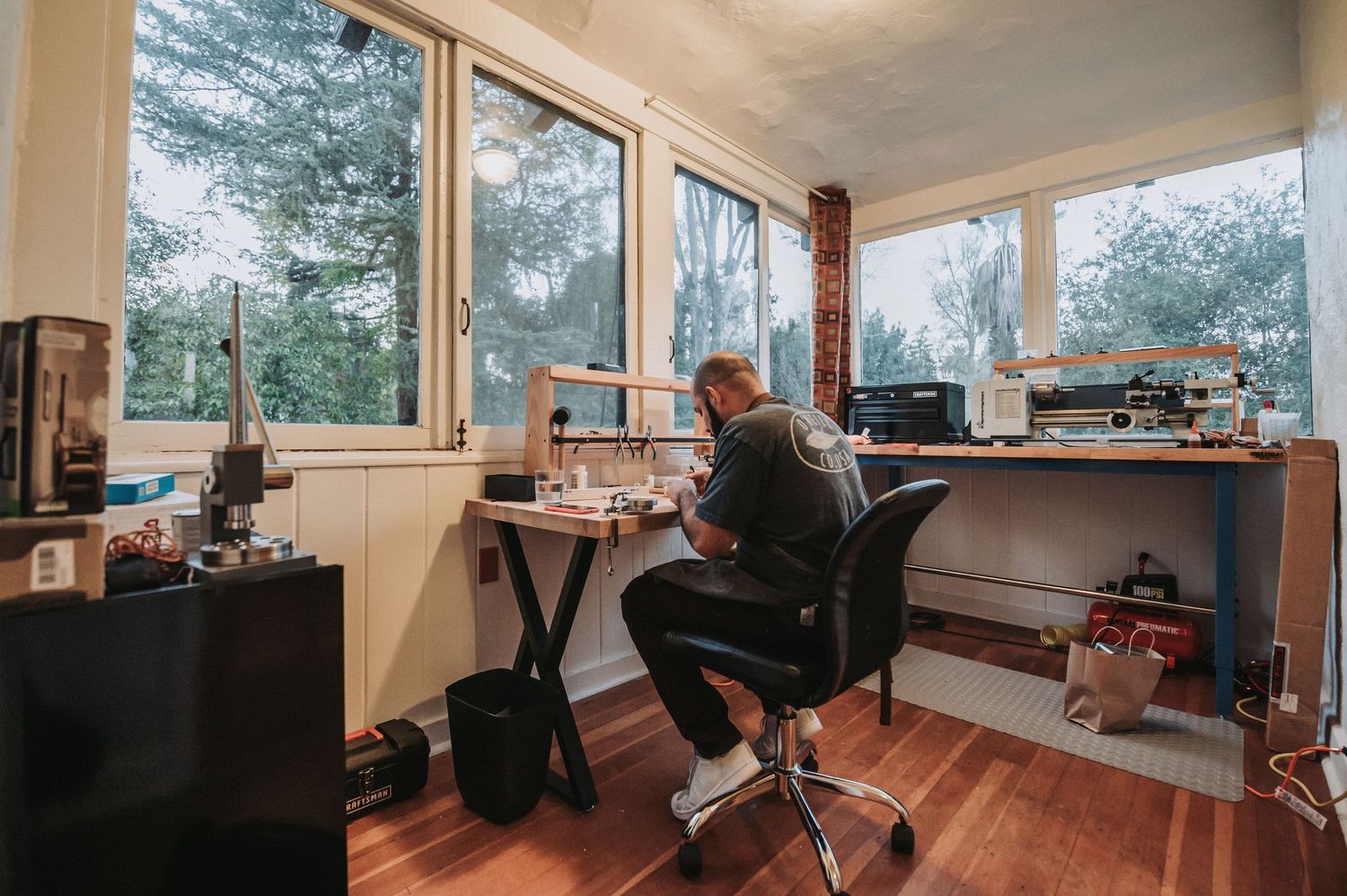
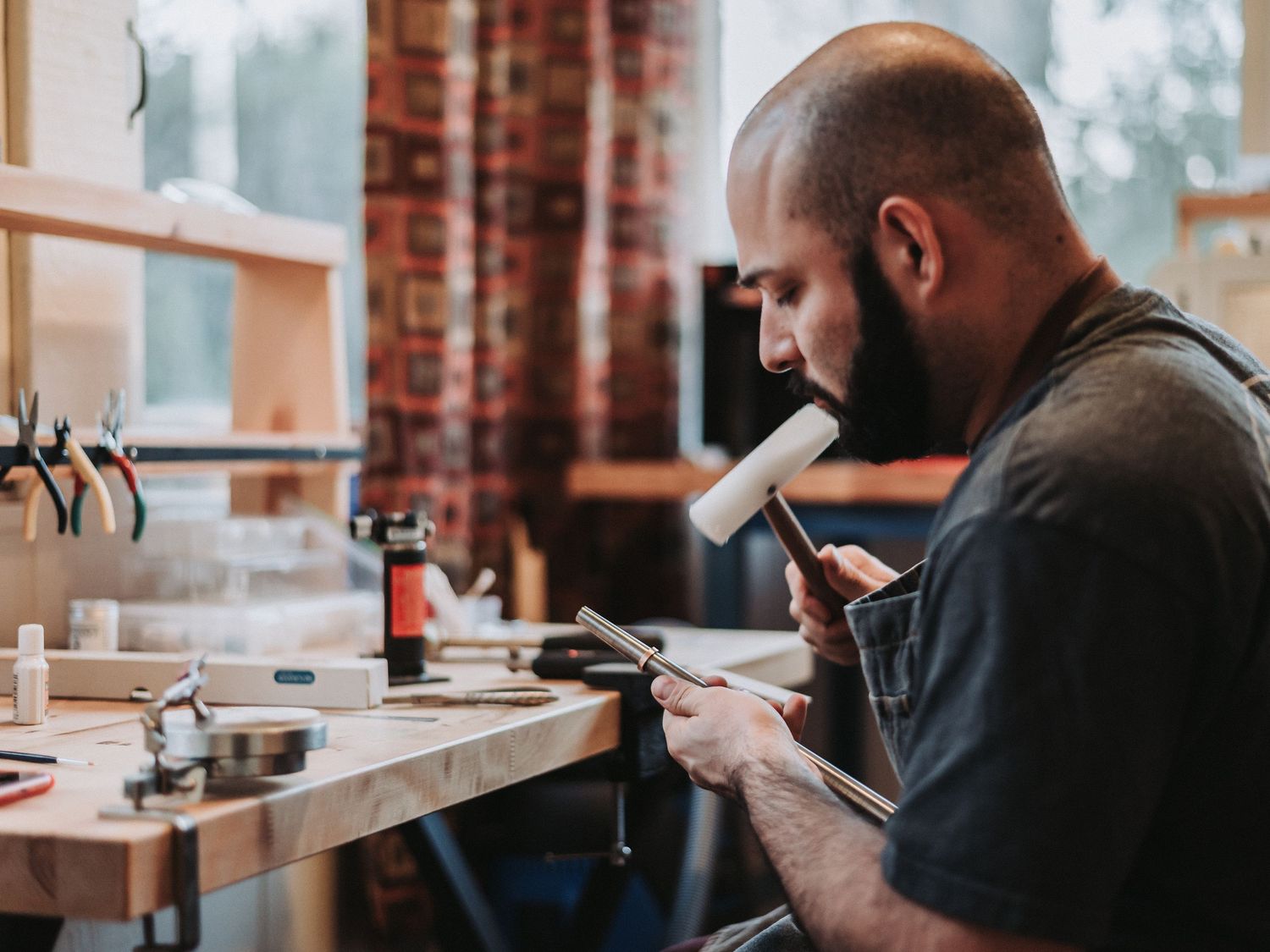
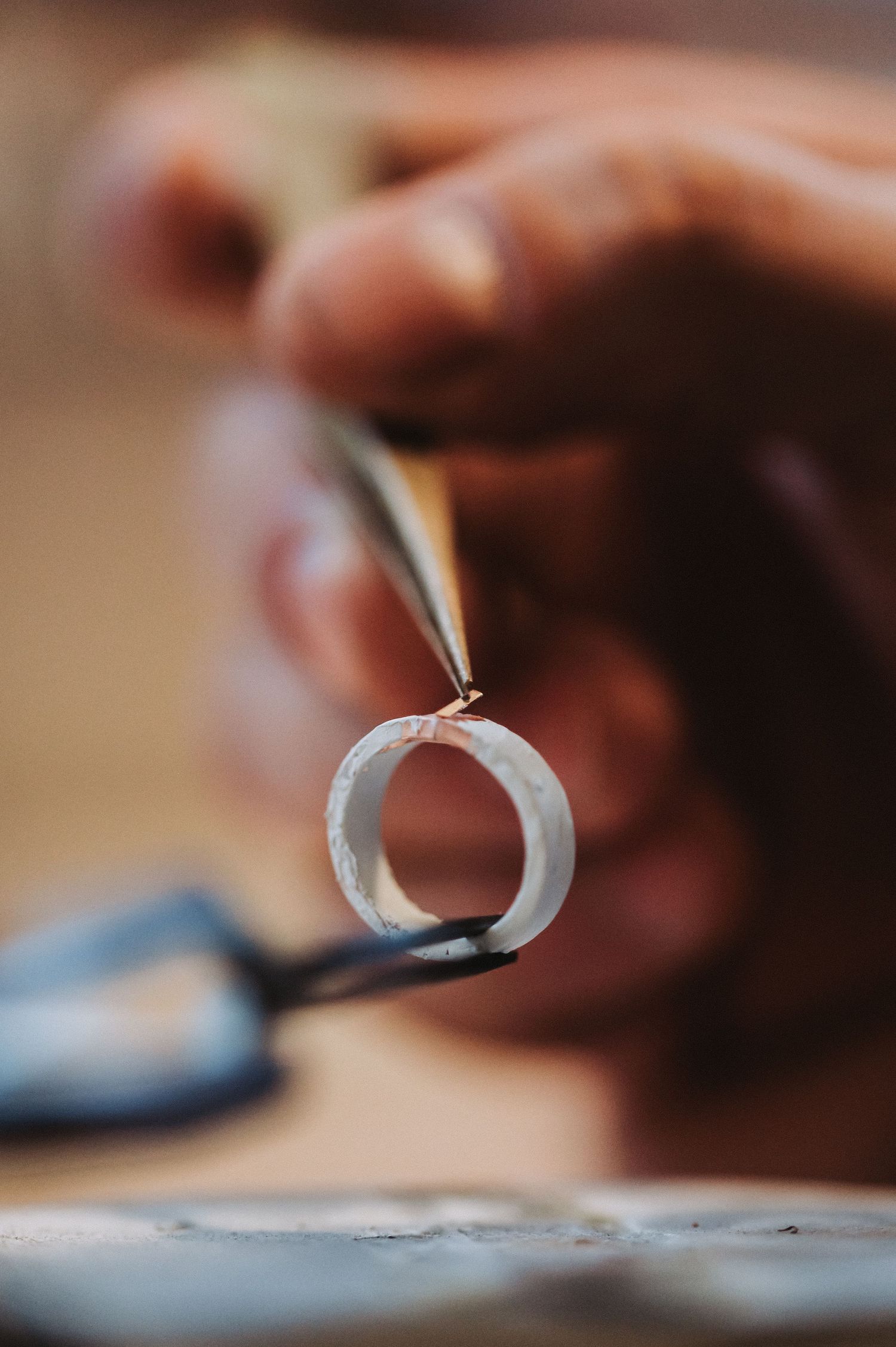
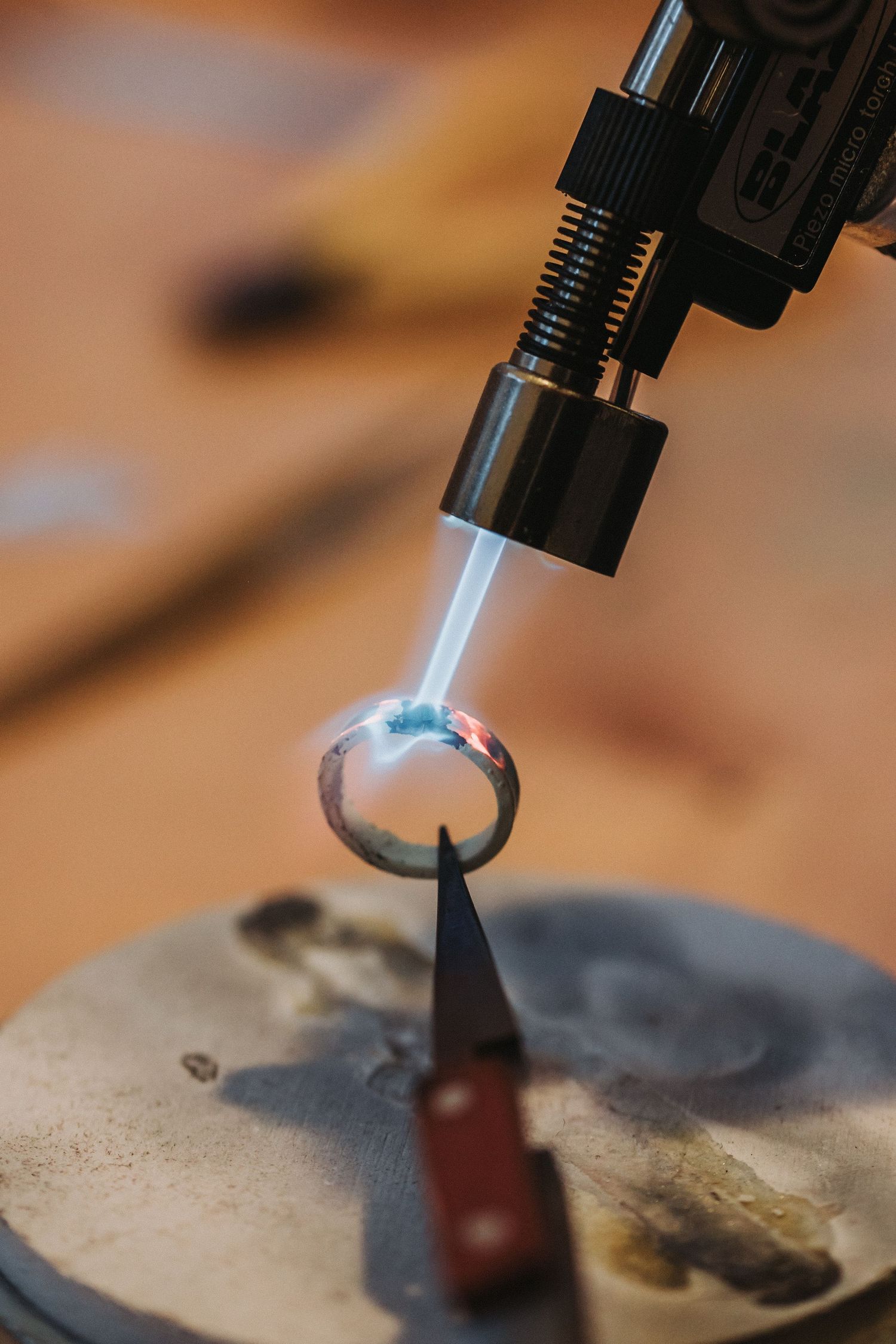
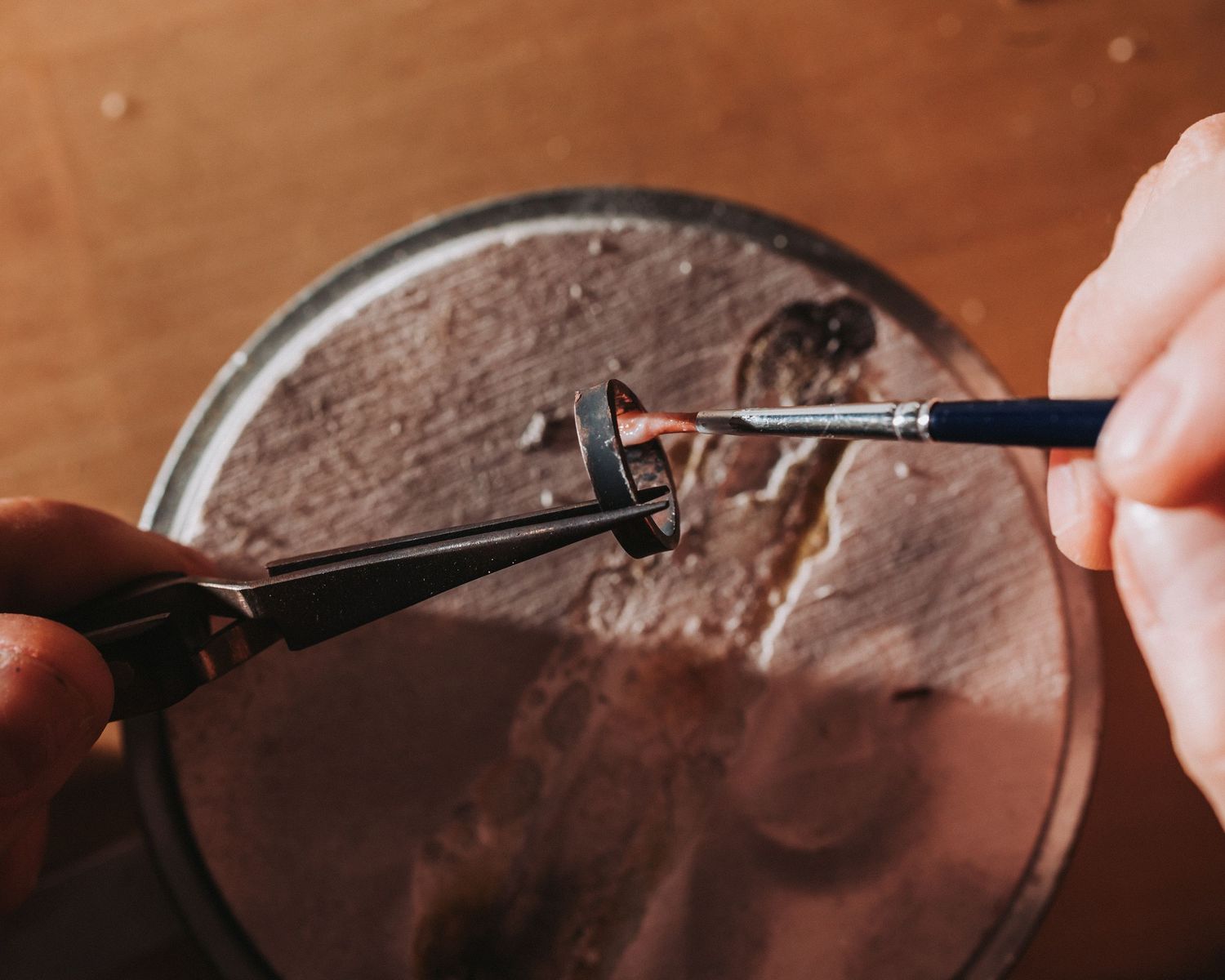
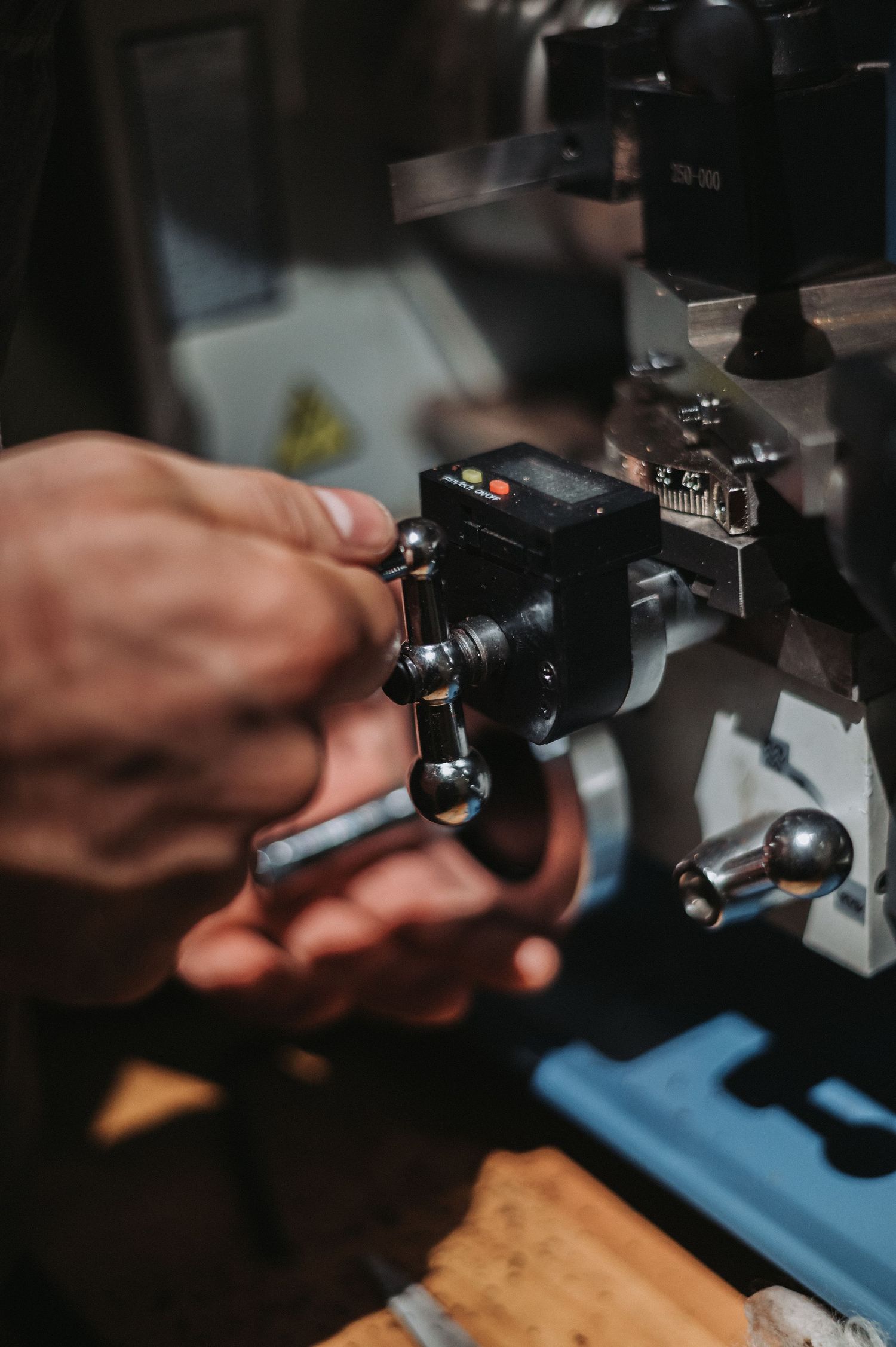
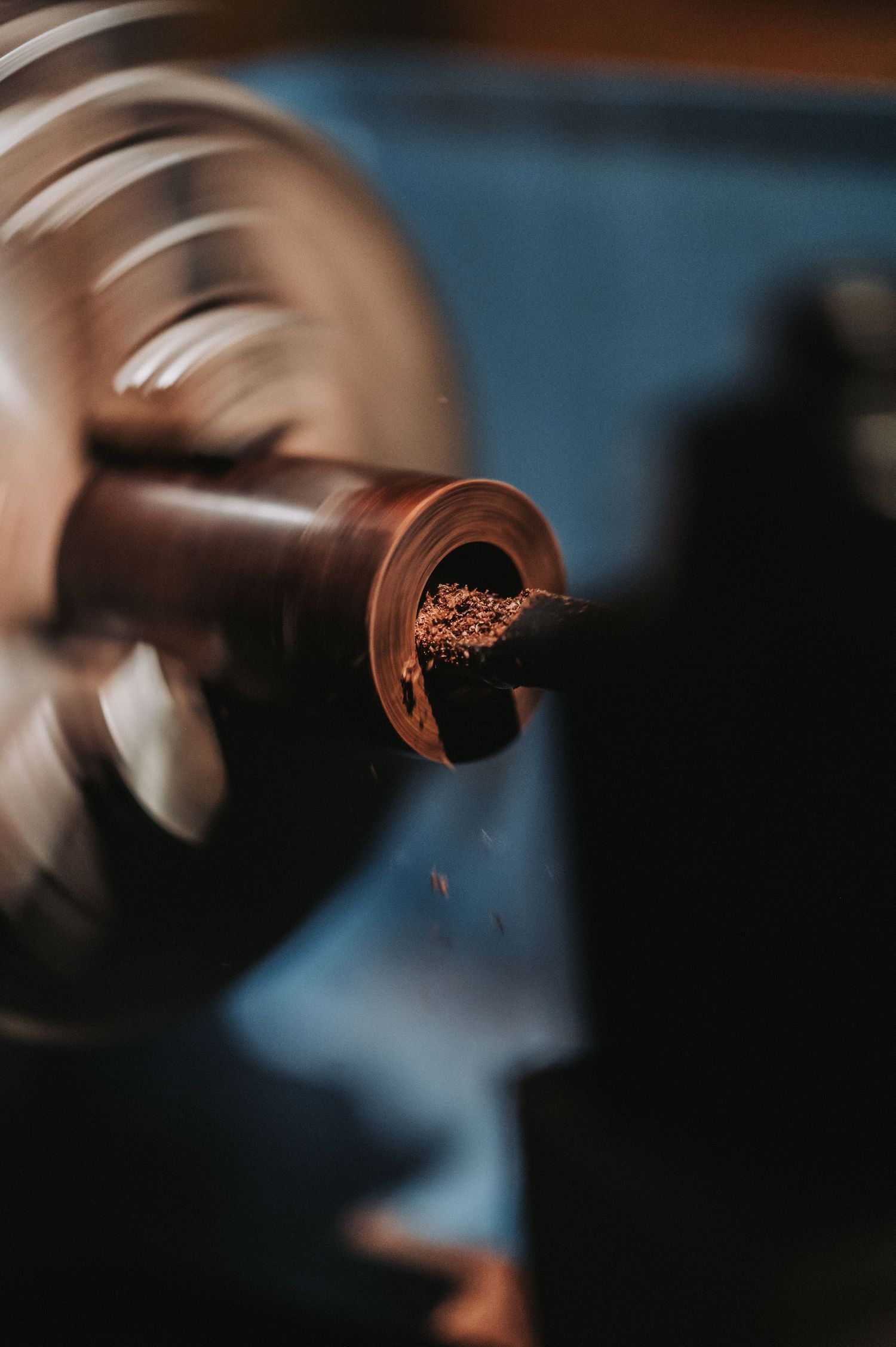
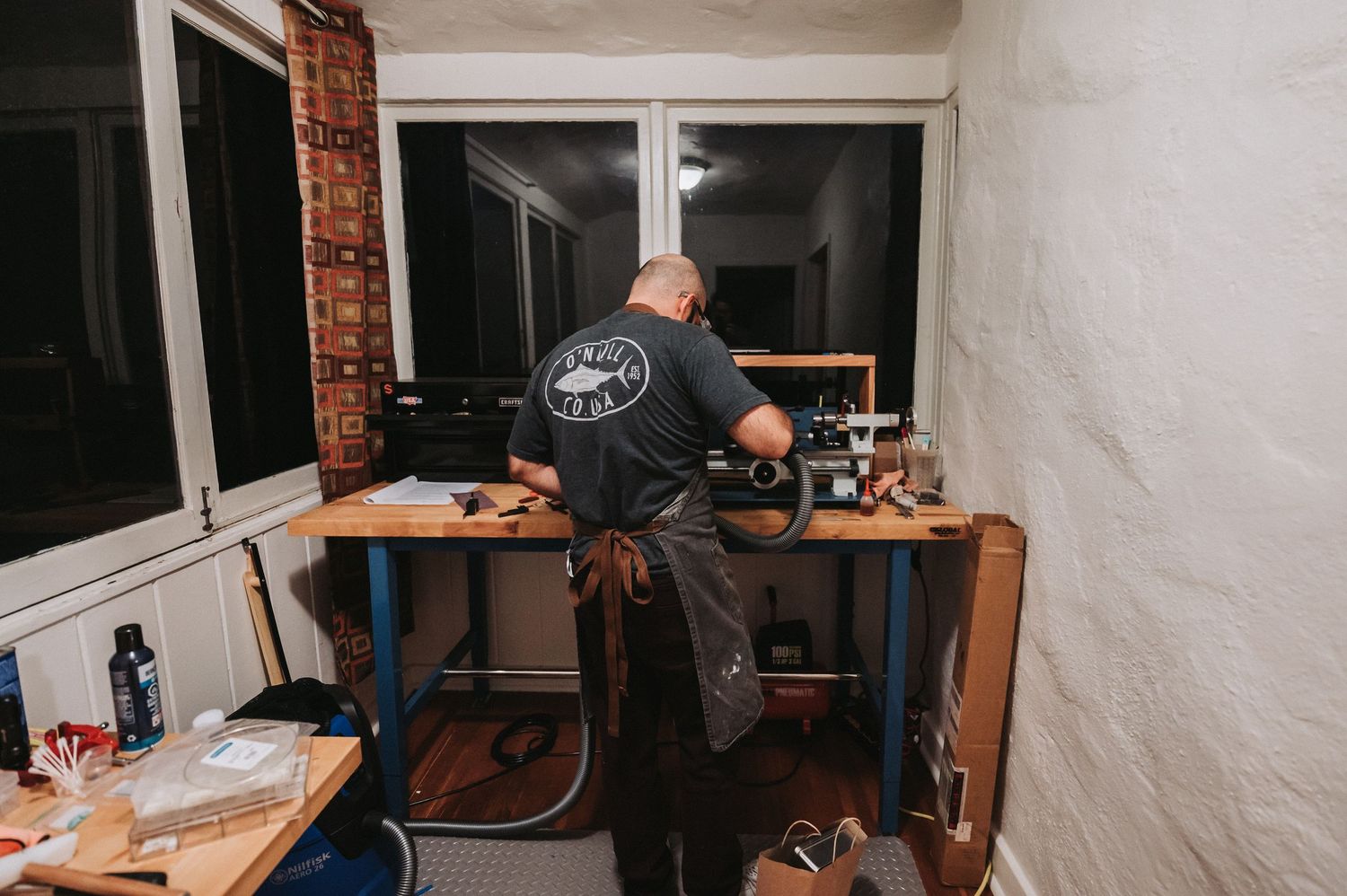
The following photos were taken at his home in Pasadena, where his other work bench and personal lathe are located. It was a Sunday afternoon in December, a plethora of sunlight bathing the entire workspace through the expanse of windows in his second story shop.